Monday, April 04, 2016

Criminal Tension

It’s fair to say that my usual television habits aren’t exactly light-hearted. I loved Breaking Bad, but generally saw it more as a surrealist family drama. So understand that when I say that American Crime is tense, I mean it’s, like, REALLY tense. This is probably the most uncomfortable show on television. Counting the Republican Debates.  If you can get yourself comfortable with being a little uncomfortable, however, it’s one of the few shows that I’ve seen where I continually think to myself, “How the hell is this show on television?”
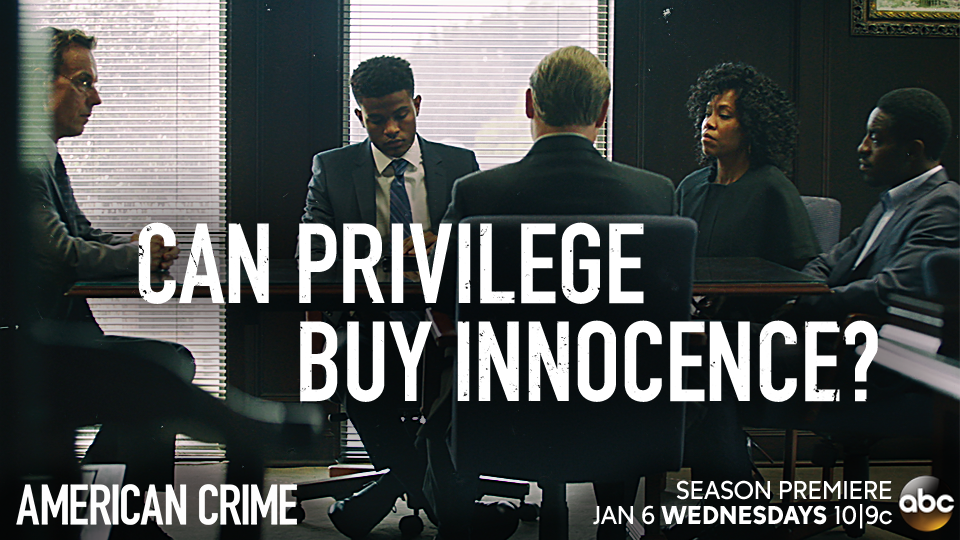
So, something light and effervescent tonight then? 

Before I go any further, I should mention that American Crime is not to be confused with American Crime Story: The People vs. O.J. Simpson. The latter is the latest offering from Ryan Murphy and company, capitalizing on the success of American Horror Story by launching a new anthology franchise that will explore real American history. American Crime is also an anthology series, however this is from writer John Ridley who is most known as the writer of 12 Years a Slave.

As an anthology series, American Crime changes its story each season though retains much of the same cast. The story this season revolved around an elite private high school in Indianapolis and the fallout that occurs at that school and amongst the students, teachers, parents, and community members when it comes out that a student reports the he was raped at a party hosted by the school’s powerhouse basketball team. That set-up alone should tell you most of what you need to know about all the places that this show is unafraid to go: the simmering racial tension that exists in American cities, overt and covert homophobia in a post-Obergefell country, what politicians used to call “class warfare”, and the morally grey area that school administrators inhabit in trying to provide an education in a time when funding is low or non-existent.

American Crime is unflinching in looking at each of these issues. It’s also a testament to how well put together the series is that it never feels overstuffed despite all the issues on its plate. That’s largely because it correctly understands that the uniting strand behind all of these things is a collective fear of “the other”, the person that is different from us. As such, all the racism, homophobia, class tensions, privilege, and cutthroat business actions are accurately interpreted as symptoms of the same ugly disease.  What makes it good television is that the characters are so completely watchable that viewers are far more likely to get wrapped up in the story than feel like they’re attending a political rally.

This scene actually passes for almost "playful" relative to some of the others... 

So what’s it actually about? The action mostly revolves around an elite private school headed by Leslie Graham (Felicity Huffman) and attended largely by the children of Indianapolis’s upper class families.  Working class mother Anne Blaine (Lili Taylor) is an exception, sacrificing all she can to afford the tuition for her 17-year-old son Tyler (Connor Jessup), who previously attended one of the city’s rougher public schools. The story begins when Anne is informed by Leslie that Tyler is set to be expelled from the school after lurid photos showing him drunk and in various stages of undress have surfaced on the internet, a direct violation of the school’s code of conduct. Tyler confesses to his mother that the photos are genuine, however that he was, in fact, drugged and raped by another student while attending a party hosted by the co-captains of the school’s massively successful Basketball team.

Tyler’s claim is the catalyst for significant unrest at the school, currently in the midst of a multi-million dollar fundraising effort that Leslie hopes will catapult her to an even loftier position than Headmaster. At the same time, it shakes the confidence of the school’s basketball coach, played by Timothy Hutton, as he must face uncomfortable questions about the behavior of his players, including whether or not one of them is truly guilty of the crime and if so what that means. Caught up in all of this is the LaCroix family, headed by matriarch Terri, played by Regina King. Terri’s son, Kevin (Trevor Jackson) is one of the two co-captains and Terri worries that these allegations will derail her carefully planned future for her child. As one of the wealthy, she can afford to hire representation to protect Kevin’s interests, even if that means causing harm to victim Tyler or to the other student implicated directly in Tyler’s claims, co-captain Eric (Joey Pollari).

Safe to assume "have conversation about not getting involved in a rape charge" was not initially in her work plan.

Terri is a mass of contradictions and Regina King plays every one of them beautifully; she’s the driven perfectionist career woman who wants to play the boys’ game but is intensely aware of what it means to be an African American woman in that world. She is both controlling and patronizing of her son and at the same time his biggest champion and a doting mother. She represents the curious intersection of being one of the sole minority families at an elite upper class predominately white school and at the same time being one of the wealthiest, affording her son access to the kind of privilege that other characters can’t even dream of. Seeing Regina King walk the fine line of each of these near-contradictions every episode is one of the joys of watching the show.

Likewise, watching Felicity Huffman as Headmaster Leslie Graham is like watching a Venus flytrap getting ready to spring. Leslie is utterly composed and in control, exuding concern about her students while managing the political and administrative duties of her school. All that control belies her ruthlessness, however, as we quickly see when trouble descends and Leslie manipulates, maneuvers, and manages problems away, always with a level voice and the kind of platitudes about leadership and responsibility that have all the genuine emotion of a Successories poster. Her chief concern lies with preserving the school and her record as an administrator, though she’s so darn sensible sounding, even when she explains to a grieving mother that because the mother signed a piece of paper while emotional, the school has no obligation to safeguard the mother’s damaged child. She isn’t cold, per se; she’s tactical.
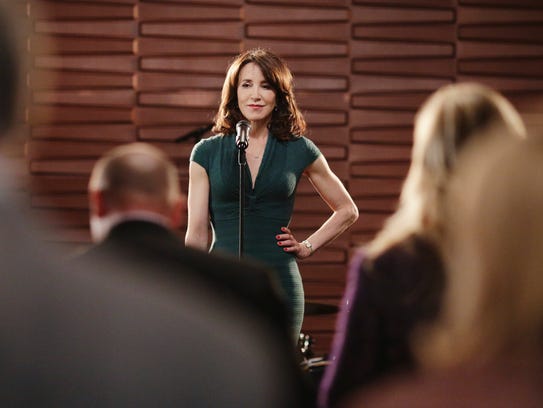
"Yes. I am fantastic, aren't I?"

What makes the show particularly uncomfortable, aside from the subject matter generally, is watching how each of these characters from their varied perspectives approach the issue. Race is front and center, though handled without the easy shorthand of poor-black-rich-white characterization that many stories fall back on. A significant subplot revolves around the actions at one of the public schools after three Latino students attack a black student for groping a girl. The school’s overtaxed principal, played by Elvis Nolasco, suspends the three Latino students for their frankly violent assault leading to outrage by the Latino community who point out that the black student went unpunished despite attacking a girl. The principal, a black man, must examine how his approach is not only intended but viewed by communities that are already racially divided.
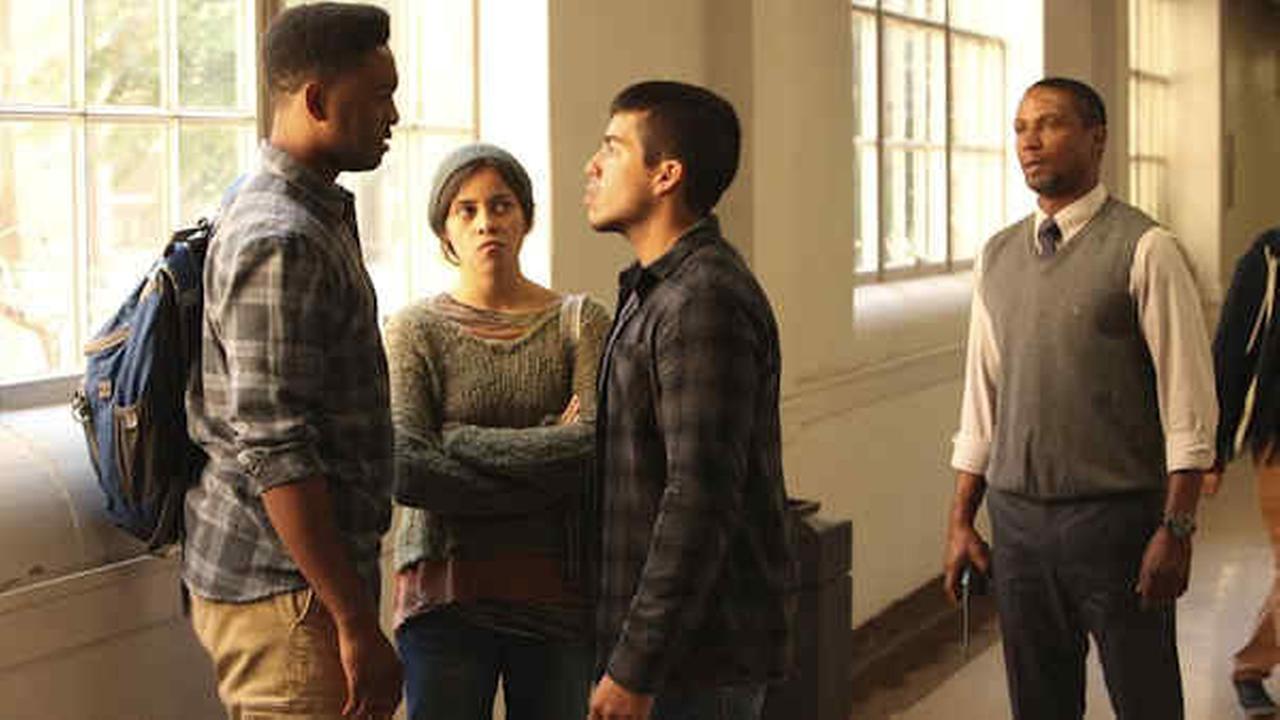
Ugh. Simmering racial tensions in high school. Worse than math homework, amirite?

Homophobia is also an evident theme and, with one particularly terrifying exception, is addressed mostly in the kind of “er, not that there’s anything wrong with that” wishy-washiness that shows that a fair number of people actually believe that there is, in fact, something very wrong with that but just recognize that they can’t say such things. (There are likely a lot of Trump voters in this story.) Tyler’s mother and his girlfriend struggle to find the middle ground between being supportive of him and deeply uncomfortable with his lie-of-omission. Tyler’s sexual orientation becomes a subject of debate as he’s called to justify his own feelings because they have bearing on a criminal case. His own family, one that is deeply loving of him, shows their own flaws when Tyler recounts how one of the surrogate parents who helped raise him, a man who still clearly cares for him as a son, unthinkingly continues to throw words like “faggot” around as insults.

And then there’s the issue that makes everyone uncomfortable: Tyler’s rape. Anyone who has spent any significant time around the issue of rape will recognize all the hallmarks of familiarity here. As the series progresses, the rape takes on a grayer hue reflecting the reality that most rapes aren’t committed by strangers in alleys but by someone we know. When it comes out that Tyler went to the party willingly and, in fact, with the intention of having clandestine sex with his attacker, not only does Tyler have to come clean about his sexual orientation but also the very nature of it and the exploratory nature of sex itself. When his mother angrily demands to know if he intended to have sex, his response is a weak but ultimately exactly correct one: “I didn’t go there intended to be violated.” We logically know that we’re not supposed to blame the victim, but the myriad of ways in which we still manage to are fully on display here, particularly given that the victim is male.
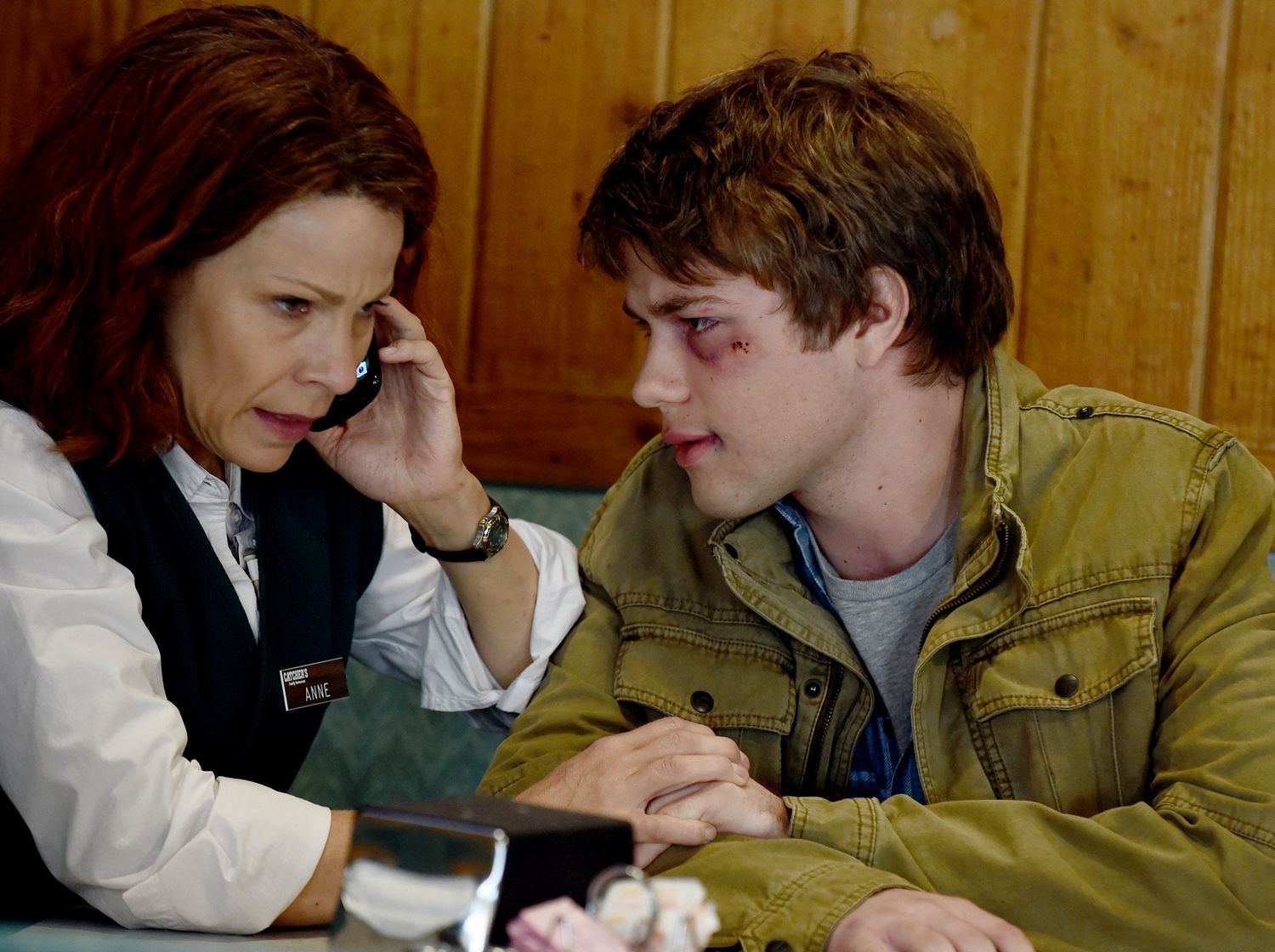
Predictable MRA bullshit misinterpretations to being in 3...2...

When you’re dealing with so many heady issues, it’s inevitable that some of the presentation is going to get a little mucked up. Viewers may find it unsettling that the victim of rape here is male, particularly given that the number of male rape victims, while certainly in existence, is far outweighed by the number of females. It’s not that hard to draw the conclusion that the rape is given its importance only once it becomes something that happens to men. And while there is a female victim of sexual violence among the show’s ensemble cast, her story is given nowhere near the heft or screen time as Tyler’s.

Likewise, the show’s one prominent African American family is wealthy and powerful, particularly in contrast to the other predominantly working class white families. At several times in the season, different white characters seek out Terri LaCroix and her husband to ask for assistance and are unilaterally rebuffed every time. It’s not terribly hard to see a racist form of wish-fulfillment embodied here whereby a viewer, again likely also a Trump voter, would interpret this as yet more evidence of how black people have gotten the upper hand over white people and white people are punished unfairly. While the show clearly takes pains not to sympathize with such a position, it shows just how tricky it is to tackle these issues even given the full breadth of ten hours’ worth of air time.

Which, ultimately, is what leads to the points in American Crime where the writing stumbles. The show is very eager to address big issues that don’t normally get their day on TV aside from a few “very special episodes.”  For all the deftness it manages in raising these big questions, it has a hard time providing any answers to them. In addition to a narrative and thematic gap, it also leads to some plainly uncomfortable dialogue. Characters are tasked from time to time with expressing the themes of the show, leading to dialogue that no human being has ever said independently. It’s so eager to get in the big point that it sometimes tells when it should show. The writing works best when it isn’t trying to underline its own thesis.


The end result of this story is less about a particular bad thing happening than it is about how bad things continue to happen. It illustrates how crime creates a ripple effect. One crime inevitably leads to another and victims can become perpetrators startlingly fast. Episode 8 even inter-cuts the dramatic action with real life interviews with the victims and survivors of school shootings and bullying attacks, showcasing starkly both the victims who chose a better path and the ones who opted for revenge. In the final episode, not every storyline has a clear resolution and the final picture is far murkier than the one that we started out with. Which is to say, unlike a lot of television, American Crime can be just as uncomfortable as real life.

Thursday, March 31, 2016

Bosch, Season 2

It's time again for one of the best opening themes in television again (I'll just wait while you rewatch the Season 1 credits):
That's right, everyone, Bosch is back.
If you don't remember and are too apathetic to read my review of Season 1, Bosch is a police procedural based on the mystery novels of Michael Connolly (fun fact: The Lincoln Lawyer -- the book and the Matthew McConaughey movie -- are a spin-off of the Bosch novels; apparently the Lincoln Lawyer is Bosch's half-brother).

As we left Season 1, Detective Heironymous "Harry" Bosch (played by Titus Welliver) had stopped a serial killer, solved the murder of a little boy, and gotten himself deeply in trouble with the police department for reasons completely unrelated to his gruff personality and "pragmatism" when it comes to police procedure. It's now six months later; Bosch is back to work solving crimes when a mobbed-up Armenian pornographer is found shot dead and stuffed into the trunk of his Bentley.

Suspicion immediately falls on the victim's wife, Victoria Allen (played by Jeri Ryan), as Starfleet is always suspicious of the Borg:


Seriously, though, it's because Tony Allen was a man who launders money for Armenian organized crime and spent a lot of time in Vegas in the company of strippers not his wife. She just maybe was jealous and looking for some of the money.

But clearly she didn't double-tap Tony on a lonely California highway and shove him in his trunk. So who did?

Bosch applies his trademark lack of tact and vengeful need to get the perp to this case, even when it makes him enemies with the mob and the FBI. In the meantime, we continue to follow some of the other characters from Season 1; Deputy Chief Irving is still trying to finagle a chiefship out of Los Angeles politics and his son is working undercover for Internal Affairs. Surprisingly, these plots intersect with Bosch's main case in a way that is neither too brief nor too contrived.

I really enjoy Bosch. It's gritty; Los Angeles in this show is a hot desert full of nasty corrupt people, and that's just the police officers. But each person has a personality, real motivations, and are played well by a cast of people who generally aren't "Hollywood pretty." Even the villains are people, which is refreshing, because that wasn't true even for this show last season.

Last season, Reynard Waits was kidnapping mothers and leaving their infant kids behind in strollers crying. Reynard was a monster; remember that we are introduced to him with a dead prostitute in the back of his literal murder van. There are no monsters this season, just people who have decided to do evil. And the distinction is clear. Bad people still do normal things, like hang out with old friends and then go back to their hideouts to have trouble opening a tin of disgusting-looking Vienna sausages (maybe it was the lighting, but they looked super-gross). The show is better for it.
This gunfight, from the literally explosive final episode, was also one of the most "real" I've seen -- everyone's shooting blind, hitting things by luck alone, and desperately ducking not to get shot.
One warning: this season does not end "tidily." Yes, the bad guys are caught, but it's more of just a thing that happens than a denouement, because life continues to go on. It's interesting, it's plausible, but it's not an NCIS "got the bad guys let's high-five and have some drinks" kind of ending.

Tuesday, March 22, 2016

Daredevil, Season 2

So, I've watched the new season of Daredevil, the original "Marvel comic book show on Netflix."
It's not much of a spoiler to say this season has more ninjas.
I reviewed the first season some time back, so I thought I'd take first crack at Season 2. However, my thoughts have become long and nitpicky, so I've provided some TL;DR versions up front.

Short review: If you liked the first season, you will continue to like Daredevil. There is a lot of awesome in the show.

Slightly longer review: This is a very entertaining second season that, due to not having the novelty of introducing the character, has to work harder to be as awesome, and it doesn't quite make it. It's good, but not mind-blowing.

The long, rambling review you read this blog for:

Season Two opens some months after Season One; the Kingpin is in prison. Blind but blessed with super-sensory powers -- like the ability to know without actually being able to see how much facial stubble he should have before he stops being sexy and starts being a guy clearly too lazy to shave -- Matt Murdoch continues to prowl the streets at night as Daredevil. During the day, at his law firm of Nelson & Murdoch, Murdoch is flirted with by his office manager, Karen Page. She apparently went for the mysterious hot lawyer in the partnership (Murdoch) instead of the funny, dependable husky one with the pageboy haircut (Frederick "Foggy" Nelson) who was clearly trying to make a connection with her all of Season One, and was perfectly charming doing so, but does not have Charlie Cox's biceps or abs.

(An aside: Mike Colter's Luke Cage still has the best-defined chest in the Marvel Cinematic Universe.)

I so want to like the second season of Daredevil more than I do. The acting remains solid, with notable performances by Jon Bernthal as Frank Castle ("The Punisher") and Vincent D'onofrio reprising his role as Wilson Fisk ("The Kingpin").
Jon Bernthal in a scene that does not require a particularly large acting range
Just as everything seems to be going all right -- except for the fact that no one actually pays Nelson & Murdoch except in foodstuffs -- former Marine Frank Castle starts avenging his murdered family by shooting his way through half the organized crime in New York, showing all the restraint of a Quentin Tarantino movie. Murdoch, who (and this is a theme of the season) takes his Catholicism seriously and believes the power to take a life is God's alone (beating them into a brain-damaged concussion is totally within God's plan, though, as I'll mention later), is compelled to intervene.

Simultaneously, there's some business with a ninja-themed magical death cult which brings Matt's super-assassin ex-girlfriend Elektra back into his life. With all the super-tsuris, Murdoch finds it harder and harder to be the Daredevil and be a lawyer, much less a decent boyfriend.

Let me reiterate before I nitpick the hell out of it: I found it decent. It was diverting. Best points:
  • Wilson Fisk's fight choreography is amazing. The Kingpin fights with his weight and strength and it's fascinating to watch. Frankly, the Kingpin episodes in this series were the most interesting to me.
  • There's a scene where the Punisher has to murder his way through a gauntlet of angry men armed only with his fists, and, as grotesque as it is, it demonstrates how Frank Castle's will to survive just keeps him going (unlike some other fight scenes pointed out below).
  • Madam Gao is still (briefly) in the show. She's still amazing as evil tiny grandma. 
The plot moves along at an agreeable pace, and there's lots that's still good, but there are some significant weaknesses:

1) TOO MANY VILLAINS
Last season, we had just the Kingpin. There were some subsidiary baddies, but it was just one plot.

Now, while Matt Murdoch having way too much on his plate is a plot point, there's more more villains than needed for that:
A) The Punisher (an antagonist if not a "villain") is murdering everyone in NYC on his long if ill-defined hit list.
B) The Hand, the aforementioned magical death cult, is doing something apocalyptic in a vaguely Asian way which involves Japanese people and ninja and makes me feel a little bit racist for watching it.
It was a much more sensitive treatment when the Tick and Oedipus faced "The Night of a Million Zillion Ninjas."
C) The Kingpin is rebuilding his empire of crime.
D) There's also a mystery drug dealer who is the proximate cause of the Punisher's family being killed and whose identity is revealed only in the last few episodes at which point you don't care.

You cannot do justice to all of these plots while having four separate antagonists, at least not in 13 episodes (maybe 26, but Agents of Shield continues to show us how to waste a lot of episodes on fanboy references and not enough Clark Gregg). Each villain has associated characters; the Hand brings in Elektra, as well as my least-favorite Daredevil-universe character, Stick (least favorite partly because "blind guy who can hit people accurately with a crossbow" means he isn't "blind" as most people understand the term, but mostly because his plot entwined with the Hand and if you can't tell, I find vaguely-Asian apocalyptic death cults tiresome).

2) LACK OF WOMEN TALKING TO EACH OTHER EASILY INVITES NEGATIVE COMPARISONS TO JESSICA JONES
So, remember last time, when I said Daredevil failed the famous "Bechdel test"? 

Still does, and in a crazy blatant manner.

Seriously, there are only a handful of scenes where two women have lines, and in those scenes, the number of times that women speak to each other is even lower. There are only two substantive conversations between women that I counted; both are between Night Nurse and a hospital administrator and, frankly, are irrelevant to the plot.

Let's not get confused and think I'm saying a story must be include the conversations of women to have merit. They don't. It doesn't even mean the stories are sexist, although they often are. 

Here, failing the Bechdel test makes the story weird. Let me give you an example: watching the scenes with Karen Page in them, it feels like Karen Page exists in a world where there are strangely almost no women. 
Typical number of non-Deborah Ann Woll actresses in the same scene with her.
Karen works at a law firm where both lawyers and all the clients who have anything of importance to say are men. All but one of the law enforcement officers she speaks to are men; all of the police officers assigned to protect her in various scenes are men. The journalist she has regular conversations with is a man. When she digs up a source to speak to, that person is always a man. 

Furthermore, there are two other major female characters in this season. Karen Page doesn't speak to either of them. She's in one scene with Elektra where Karen speaks four lines directly to Matt Murdoch, then leaves. Foggy gets to have a long conversation with Claire ("the Night Nurse"), but Karen doesn't even meet her. 

Claire and Elektra are never in the same scene together. 

Remember: this story takes place in modern New York City. Not a North Dakota oil field or on an Alaskan fishing boat. Statistically, there are women in nearly equal proportion to men in NYC.

Now, we get back to Jessica Jones. Even in a show where there weren't that many male characters, it was clear that men existed in New York. Just because Jessica's boss, BFF, craziest next-door-neighbor, doomed client, etc. were women, that didn't mean that she didn't also have conversations with men who were cops, bar owners, drug addicts, crazy mind-controlling sociopaths, etc. It was a New York that seemed, well, not a weird alternate universe version of itself.

3) YES, I KNOW THAT IT TAKES A LOT OF EFFORT TO KNOCK A PERSON UNCONSCIOUS BY PUNCHING HIM IN THE FACE REPEATEDLY, BUT YOU DON'T NEED TO SHOW ME EVERY TIME

I am not kidding when I say that basically all of the Punisher's facial bruising in this scene can be attributed to Daredevil or someone else punching him in the face repeatedly to try to knock him unconscious.
Daredevil's fights are brutal. In small doses, this is "realism." In large doses, it's tiresome. 

Culture blog The Mary Sue loves a five minute fight scene that takes place down a flight of stairs, calling it an iteration of the "hallway fight" from Season One. I hate it and think it's all that's self-indulgent about the violence and fight choreography of Season Two.

If you don't remember Season One, early on in the season Daredevil has to rescue a child from some criminals. He breaks into their place and fights three rooms full of them in a scene that takes place mostly in the confines of a claustrophobic hallway. It was pretty badass.

It also was early in the show, establishing Daredevil's facility with hand-to-hand combat. Also, in that scene, he's basically wearing black exercise clothes as his superhero outfit, which you can see is torn in places from violence. And even in that scene, there are times where Daredevil pops into a room with a bad guy and the exact method of his dispatch is left to your and the foley artist's imagination.

So, in this new fight scene, Daredevil has, for reasons too spoilery to explain, to fight his way through an entire biker gang down about twelve flights of stairs with an object duct-taped into one hand and holding a chain in the other. No surprise: he does so.

Unlike the scene in Season One, it's now been pretty well established that Daredevil, even injured, can mop the floor with anyone who isn't a Navy SEAL or trained by ninja or something similar. Remember at the end of Season One, where a dirty cop who was about to get shot in the head closed his eyes and then, without the camera leaving his face, there were a bunch of punching noises so that when he opened his eyes Daredevil was standing there and all the people who wanted to kill him were beat down? I don't know how else to say it -- it is not a surprise that Daredevil can beat up a building full of "mere mortal" criminals. There's really no tension to this scene; you know he's going to plow through all of these guys because it's been done on- and off-camera for a season and a half. 

Furthermore, as of the end of Season One, Daredevil wears bullet- and knife-resistant armor, so the risk he takes in fighting an entire biker gang is significantly diminished. Not only do we know that he's going to go like a weed-whacker through these guys, we know that, unless one of them is super-lucky, they can't really even hurt him much. 

And on top of the lack of dramatic tension, there are no rooms where Daredevil can fall in with a guy and you not have to watch him "realistically" beat a person into unconsciousness. Look, I appreciate that Daredevil is a show where, often, it's clear that you usually can't knock a person unconscious with a single blow to the head, but watching a fight where Daredevil delivers "I know your concussed, but now stay down" blows to people's heads is just not that much fun. I sat through it saying to myself, "okay, so when do we get to the bottom of the stairs?"

The excruciatingly long stairway fight is only the apex of watching Daredevil cause chronic traumatic encephalopathy to nearly every baddie he encounters. We see lots of fight scenes that go on for a long time because they have to literally beat the bad guys into submission. It gets old and I just don't enjoy it. 

Separately, I counted at least three separate stabbings in the eye with a sharp object, one of which was waaaaay more drawn out than it had to be. If your fight choreography go to is "stab him in the eye," you need to work on your creativity. 

BULLET POINTS OF NITPICKINESS
If you're going to have Daredevil fight a weird supervillain, the Spot is way more interesting than a mystical Asian death cult.
  • New York criminal procedure doesn't work that way.
  • Small law office finances, especially dealing with New York City rents, don't work that way. 
  • That thing with the sorta-zombies was never adequately explained.
  • I'm still not sure how the ninjas are so silent that they mask all the things that Daredevil might be able to hear, but still need to breathe audibly. In the quiet places where Daredevil more than occasionally fights them, shouldn't Daredevil be able to hear the synovial fluid squirting back and forth in their joints? If they can silence that, why's breathing a problem? 
  • Daredevil's mask is really unattractive and distracting. It's like a mutant Captain America mask.
CONCLUSION

Daredevil's fine. It's diverting and well-acted. You won't regret watching it. It's just doesn't rise to hoped-for greatness. 

Thursday, March 17, 2016

11.22.63

I've been lazy. And distracted. But mostly lazy. You've probably noticed the lack of updates, and that's the unfortunate result of my laziness. The fortunate answer is that I have awesome friends who are also awesome writers and who love to watch television. So please enjoy this beautifully written guest-post from Trisha, covering the mini-series, 11.22.63, based on the Stephen King novel and brought to you by executive producer, J.J. Abrams. --Maggie Cats

There is nothing like the fixation of a kid.  I think parents today can agree with that when they are watching Frozen for the n-teenth time, or trying to wash an article of clothing that has been worn every day for a month.  This graduates into boy bands, which for my generation meant head-sized buttons of various members of New Kids on the Block pinned all over jean jackets and vests.  I think my parents could have only dreamed of something so normal, but instead they got me.

My childhood obsession was the Kennedy assassination.  I was a weird kid.

Those who know me as a weird adult are probably not that surprised.  My dad was a bit of an enabler for this, talking theories, letting me stay up past my bedtime to finish cable channel documentaries, buying me books, planning a family trip to Dallas; my mom spent a few years perpetually rolling her eyes, which she still does every time I bring it up.  So when it comes to Kennedy assassination fiction and non-fiction, books, TV shows, movies (JFK twice in the theatre), I am fairly well versed in the genre, and always excited to add to my random “expertise.”

Full disclosure: if I had known 11.22.63 was a book, I would have read it first.  I missed that memo though, so here I go, even though the book is always, always better (except for 50 Shades of Grey).

In 2016, in Lisbon, Maine, Jake Epping (James Franco) enters a TARDIS in the closet of his friend’s diner that transports him back to October 21, 1960.  The episode is called Rabbit Hole, but I prefer thinking that the Doctor and the TARDIS are somehow camping in the diner closet as opposed to a late white rabbit. Call it a personal preference.

Jake's friend, the always brilliant Chris Cooper, explains the rules: no matter how much time you spend in the past, only two minutes pass in 2016.  And every time you enter the TARDIS you go back to October 21, 1960, and everything you did during the prior visit resets.  Chris Cooper wanted to stop the Kennedy assassination, which would somehow butterfly to no Vietnam War and a more perfect union today.
This explanation was a little tenuous to me, but I do not have the personal demons of a Vietnam veteran.

For spoilery reasons Chris Cooper cannot complete this mission, and implores Jake to continue on with all of the information he gathered during his prior visits to the past.  Jake, fresh off signing his divorce papers and burying his dad, acquiesces.

The past brings us James Franco sans scruffy goatee, so I already like it.  The first few scenes were so typically Franco that I had flashbacks to Never Been Kissed and Whatever It Takes (holy crap, James Franco was in Never Been Kissed!--MC), and not in a good way. Jake makes his way to Dallas to start positioning for changing the future/past, but as Chris Cooper warned, the past doesn’t like to be changed.  It strikes back in minor, and then major ways, and a shattered Jake finds himself reassessing his mission, and the potential tragedies of the next three years as he works towards this end.

I love the ambiance of Stephen King’s writing, and that shows like Haven (a personal favorite) and 11.22.63 work to bring that slight, surreal tinge to the screen, the not-quite-normal undercurrent that keeps you fully concentrating on the minute details, because who knows when they may reappear.  This isn’t an on-in-the-background show, especially in the first two episodes, which detour away from the plot that the previews promote.

In the second episode Jake finds himself positioned to right a wrong from his 2016 life, and his interactions surrounding this decision drive his character forward, but not the Kennedy story.  James Franco gives an amazing performance, especially when he is listening to others.  I am not a huge Franco fan, but in this setting his perfectly practiced micro-expressions are spot on.  At first during this episode I was tempted to call it a throwaway, and if I wasn’t so excited about Dallas, November 1963, I might have turned it off.

But the supporting cast performances are worth the entire watch, and the ending reveals a Jake much better equipped to move forward; even though it might not be his decision alone to do so.

Since Jake is in the past, Chris Cooper is confined to flash-backs (flash-forwards?).  He is so good that I always want more, and to see him outside of his tour guide role.  Josh Duhamel is more successful than Franco at ditching his high school hunk past and is genuinely creepy, albeit with perfect hair.  Credits list T.R. Knight who has not appeared yet, but I’m hopeful and eager for a Franco interaction.  Franco is best in this series when he is confronted with people whose motivations he is trying to process.

I’m writing this while starting Episode 3, which is still set in 1960.  I’m waiting for the time jump which I assume is coming, as there are only 8 episodes.  I’m waiting for the introduction of the historical characters that I know, and the conspiracy theories I love to debate.  I’m waiting for Chris Cooper to reappear in the past, though that is completely against the rules of the TARDIS.  I will keep watching until the end, and right now it is for more than just seeing Stephen King’s take on Oswald, the grassy knoll, and the assassination conspiracies, though that definitely helps.  Right now I’m eager for more interaction with new characters, and hopefully old ones, and a main character whose decisions surprise me.  That doesn’t happen often.

The first five episodes of 11.22.63 are streaming on Hulu.  A new episode is available every Monday.

Thursday, February 25, 2016

Mozart in the Jungle Is Basically Slings & Arrows. So... Awesome and Hilarious

So, I’ve been pretty disillusioned with the teevee offerings, but then lo! I happened upon ye Amazon Prime. And yea, before me was Mozart in the Jungle. And there was much rejoicing.


Is it Slings & Arrows but with an orchestra? Yeah, kinda. That doesn’t mean it isn’t great and completely addictive.

Zombie Heath Ledger, is that you?


Gael García Bernal stars as Rodrigo, the flamboyant maté tea-drinking enfant terrible conductor of the New York Symphony orchestra. Brought in to replace aging, life-crisis-having Thomas (Malcom MacDowell), Rodrigo both inspires and infuriates the orchestra’s members and administrative staff (the latter embodied by Bernadette Peters).


Rodrigo’s first subversive act is to hire Hailey (“HAILAI!!”), the ingenue oboist, portrayed by Lola Kirke. Hailey subsists as struggling musician in New York by giving oboe lessons to sullen pre-pubescent students, and by playing in off-Broadway orchestras for sub-par trite musicals. Rodrigo hires Hailey because, as he says, she plays with “THE BLOOD,” but she is too inexperienced to keep pace with the older, more seasoned orchestra veterans.

Turns out, adults come up with as many innuendos about wind instruments as 12-year-olds.


Inspired by Mozart in the Jungle: Sex, Drugs, and Classical Music by Blair Tindall (on whom Hailey is based), the show is a comedic look at the lives of classical music musicians and their business-oriented overlords. NPR doesn’t want to believe that artsy types take drugs and sleep around. Oh, NPR. You are adorable.


Executive producers are Roman Coppola, Jason Schwartzman, and Paul Weitz (the latter occasionally directs). Schwartzman, who seems to have given up acting and has decided to make a career out of being a hirsute hipster, makes occasional appearances on the show as a pretentious classical music podcast presenter. Veteran actress Saffron Burrows appears as Cynthia, the borderline nyphomaniac cellist.


For those of us who wanted MOAR Slings & Arrows, Mozart in the Jungle serves as a pretty fair substitute. The Golden Globe-winning series is not just for classical music or art wonks, although it might be the most appealing to that demographic. Like Slings & Arrows, its humor does depend somewhat on inside jokes, but the rest of it is genuinely funny and quirky.


Or maybe it’s just funny to those of us who suffered through private music lessons and a crazy competitive band program inhabited by teenage music fascists. Maybe that’s just me.


Mozart in the Jungle is free for Prime members. Plebes will have to pay per episode/season.

Tuesday, February 09, 2016

Peyton Manning’s Sloppy Seconds Super Bowl

Okay, people. It’s time again to talk about football. Like a dependable locust, arriving once every 12 months to devour all the snack food in your local grocery store, the Super Bowl arrived as predicted this past Sunday. And it was messy. (And before you tune out completely, don’t panic non-sports fans. I’m going to talk about the halftime show as well.)

Football! Now even 50-ier!
Before I get to the mess that actually unfolded on the field, here’s the obligatory background: This years’ teams were the Denver Broncos, led by quarterback and commercial star Peyton Manning, against the Carolina Panthers, led by one-man self-hype squad Cam Newton. If these names sound familiar to you, non-sports fan, it’s because Cam Newton got a lot of press for being the first person ever to win a Heisman trophy, a national championship, and be a first round draft pick in one year. Peyton Manning you know because there’s not a product on TV he hasn’t considering filming a promo for. Manning is also the oldest son of former NFL quarterback Archie Manning and the older brother of current New York Giants QB Eli Manning. The Mannings are sort of like the Lannisters of the NFL.

Google Image searching "Lannisters and Mannings" actually returns a surprising number of results

Look, I could write a doctoral thesis on the oedipal dynamics of the Manning family. Suffice it to say the comparison to the Game of Thrones dynasty is important because at age 39, Peyton Manning is an old man in pro football terms and one seen as desperate to claim his place in the family glory. When he stepped on the field for this Super Bowl, he was officially the oldest QB ever to play in the game. He’s also been somewhat eclipsed by his younger brother who has won two Super Bowl rings. When Peyton played in the Super Bowl two years ago, it was seen as his last chance to win a second ring for himself so that he could retire on top. When the Broncos lost spectacularly that year to the upstart Seattle Seahawks, Peyton was on shaky ground. This game was his for real last last chance. And, like two years ago, he would be facing an upstart team fronted by a young, fresh face that had no qualms about strutting wherever he walked.

So what drama did we actually see in the game? Well, put it this way: I’ve had to consult a thesaurus when writing this to make sure I didn’t overuse the words “sloppy” and “messy.” And not to bury the lede anymore than I already have, but Denver eventually emerged as the winner. And though the score makes that win look decisive, let me show you exactly how not the case that was.

The thing is, Super Bowl 50 was a record breaker. Not in a good way. Denver made only 11 first downs and gained less than 200 total yards in the entire game. That’s the lowest for any Super Bowl winner ever. Over at the Carolina side, Cam Newton only had 18 of his 44 passes reach their targets, about a 44% success rate. Newton was also sacked (tackled to the ground by the opposing team before he could throw the ball) seven times, which ties him for first place in the number of sacks in the Super Bowl. Between the two teams there were 18 penalties for a total of 153 lost yards. Carolina had four turnovers (unintentionally losing the ball to the other team) and Denver had two. Both sides literally were tripping over themselves trying to run the ball. There was so much fumbling, you’d be forgiven for thinking this was actually a basketball game.

One of the more dignified examples of utterly shitting the bed, professionally speaking.

It was also a relatively low-scoring game. Denver won 24-10, which by pro football standards is a very modest end result. It also doesn’t really reflect the reality of how those scores were won. Denver’s first touchdown came quickly at the start of the game, but only because Carolina somehow fumbled their own ball and Denver recovered it in the Carolina end zone. Which is sort of like when Wile E. Coyote would try to kill the Road Runner with a bazooka only to have the bazooka blow up in his own face. You can’t exactly say that the Road Runner won that exchange.

Carolina itself didn’t even score until about a third of the way through the second quarter. Denver came into the game with the highest ranked defense in the country, but Carolina didn’t exactly make them use it much. This is doubly surprising given that Carolina had a remarkable season, coming almost out of nowhere. In fact, Carolina was favored over Denver going into the game, a prediction that probably made for some fun times in Vegas on Sunday night.  

It’s tempting to see an analogy here: the upstart, anti-establishment team comes roaring out of relative obscurity to capture the media’s attention, which initially ridicules said team before taking more note of them, predicting their demise, becomes dismayed when team continues to rise, and finally all but preparing the coronation before the older, establishment team delivers the crushing blow. Not sure where else I could have seen that story.

I'll tell you what, it would be YUGE.

I’ve just been reminded by Maggie Cats that I am obligated at this point to talk about Beyoncé and, specifically, that I must use the word “fierce.”

Look, I’m not convinced that Beyoncé is an actual person. I think she’s a next-generation hologram precision-designed in a corporate lab somewhere in Heidelberg to give the world something to care about. I’m also pretty sure that Beyoncé Corporate has formed a contractual agreement with the Internet that the Internet must at all times speak of BeyoncéTM in only exaggerated, breathless terms. The Pepsi commercial halftime show kind of underscores that. In the parlance of the Internet, she “slayed.” Which, I guess? I mean, when your competition is Bruno Mars wearing a hefty bag and that one guy who Gwyneth Paltrow contentiously uncoupled from it’s not that hard to land, is it? I do think Beyoncé Corporate was smart to schedule their product’s performance literally hours after dropping another stealth song and video as a lead in to her World Tour/Adele Assassination Strategy. Well done, team! Take a long lunch today for coming up with that creative synergy.

For me, the halftime show is more notable for what happened afterwards. Which is to say, horrible people on the Internet continued to be horrible. Did you realize that all those psychedelic colors and outfits were actually secret number generators that were beaming stealth messages DIRECTLY INTO YOUR BRAIN and that Nobama knows about it and it’s all part of his plot to replace your guns with gay people? IT’S TRUE! Behold:

Your voters, America.

So, yeah. That was pretty much the halftime show.


As I say every year when I write this post, the Super Bowl is not about excellent sportsmanship or athletic prowess. It is about showmanship. The Super Bowl is event television where the only unforgivable sin is to be boring. In that sense, Super Bowl 50 lived up. Disheveled as it may have been, it was entertaining to watch the players messing all over themselves in the same way that it is entertaining to watch Japanese game shows, albeit with less crushing pain in this case. It also should give lots of support to struggling junior high school football players out there. “You see?” their parents will say to them, “It doesn’t matter if you fumbled into your own end zone. It was good enough for Cam Newton!”

Always next year?

Wednesday, February 03, 2016

The X-Files Strikes Back

I remember when I first heard the news The X-Files would return. So many feels: excitement, nervousness, glee, and of course, terror. Because what if it the show comes back...and isn't any good? What if the old magic is gone? What if the sinkhole mess of mythology that broke the show in the later seasons (and we won't even mention the second movie) similarly sucks the joy out of these new episodes?

In short, I was freaking terrified. But I also WANT TO BELIEVE.

And now here we are. The first three episodes have aired and we're halfway through the new "season." I am sure you're all wondering...how did it go?


Yes, indeed, The X-Files is back. Everything that we loved about the original show is still here and a lot of the same beats, themes, and jokes work. But I don't mean to imply it feels like no time has passed. Somehow everyone in front of and behind the cameras managed to capture the tone of the show, but it's clear that events and relationships have evolved and changed. It's like when you get together with your good friends from many years ago. It doesn't matter how much time has passed, you still click and carry on as if you had seen each other just yesterday. But now you joke about spouses, kids, or jobs. You know, actual life stuff instead of boobs. Well, let's be honest. You're still going to joke about boobs. 

Ok, so we can all agree that The X-Files is well and truly back! Of course, this also means that all the old problems with the show are still there. The alien conspiracy still doesn't make any sense, Vancouver is still not Washington, D.C., and the idea that Mulder and Scully would still be employed by the Federal government is totally ludicrous. Oh, and Duchovny is still all mumble and Anderson seems like she could start snoozing in the middle of a scene.

BUT I DON'T CARE BECAUSE IT'S BAAAAACK!

Scully still rockin the pantsuits. She wore it before it was cool.

Of the three episodes that have aired, the third (Mulder and Scully Meet the Were-Monster) is the strongest. It's also not a coincidence that it's a monster-of-the-week episode seemingly unrelated to the alien stuff. I always considered the stand-alone episodes the strongest of the series, when The X-Files could play with genre, expectations, and storytelling techniques.

Don't get me wrong, the conspiracy remains the core of the series and the reason Mulder and Scully are positioned to investigate the other weirdness. But the thing I loved most about The-X-Files was the creativity of the stories and the chemistry between the two leads. I think some of that gets lost when we spend so much time trying to explain that aliens are real and are working with a shady group of old white dudes to take over the world except not really it's just the shady old white dudes stealing the alien technology to plan a complete collapse of the world economy and then fascism. Um, something like that anyway.

I will admit that the first episode of the new series basically did what I thought was impossible: it condensed a bunch of the past mythology into something that actually makes sense and is (somewhat) easily explained. It also put Mulder in a position to have a crisis of faith, which means Scully can help bring him around. For the most part though, Mulder is still the believer, Scully is still the doubter, and Skinner is still strangely hot. And bald. Just in case you were worried about that last part.

To sum up, watching the new X-files episodes feels just like watching the old ones. Whether that's good or bad, I leave it to you to decide. From my perspective, it's most decidedly a wonderful thing.


Now if they figure out a way to bring back Krycek I can die happy.


Monday, February 01, 2016

DC's Legends of Tomorrow

DC Comics continues their domination of prime time with another show on the CW (from the same team that brought you Arrow and The Flash): DC's Legends of Tomorrow. In a nutshell: a group of B-side characters from other shows are brought together by a time-traveler from the future to defeat the Big Bad Guy who is bent on world domination. Does the show hold together? Guest-blogger, Karen, has the answer. --Maggie Cats 


I sat down to watch the newest foray into the DC-verse with a little trepidation...I'm WAY behind on both Arrow and The Flash. Will I be able to keep up with who is who? Will it make sense? Will I be hopelessly lost? (SPOILER...maybe).

During the first episode of DC's Legends of Tomorrow, I was bombarded with characters, back stories, and information. Of course, every time Arthur Darvill, from Doctor Who, is on screen I squeal with fan girlish delight. I love the fact he has stepped up to captain his own TARDIS...er, Waverider. But sadly, I could not keep all the other characters straight in this first hour of the pilot. Some I know from previous exposure, but many just sort of fade into their archetypical obscurity.

Umm...that's a lot of legends. 

Here's what I actually got:

White Canary - Tortured, sad assassin, previously dead, needs a good mission give her life meaning.

Bad guy thieves (who are quite entertaining but thus far sadly nameless for me) - want to steal antiquities and are easy to catch.

Weird, merged fire hero - old guy + young guy = fiery hero? Old guy wants to have adventures, young guy really liked when he was, thank-you-very-much.

Hawkman and Hawkgirl - Reincarnated lovers who fight Vandal Savage, the Big Bad, again and again. Hawkman is way more up to speed, with his past lives, though meeting her son apparently jolts some of Hawkgirl's memories. Apparently they had a son in a past life. Wonder how many children they left behind, lifetime after lifetime of battles and deaths?

The Atom - It's Ant Man! Only it's not. And he's really smart! But nobody takes him seriously. He's kind of a big kid needing affection and attention. Well, this is going to end badly.

Rip Hunter - It's Doctor Rory! Man, I love Arrthur Darvill. He plays tormented but good intentioned so well!
Vandal Savage - The bad guy. Who we are TOLD is awful and terrible and we even see him DO awful things but he....falls terribly flat. Where's the menace? Where's the savagery? He seems so calm and not scary. Maybe I've been spoiled, but I want some terror with my eternal evil menace. Maybe he needs some good theme music, like Darth Vader.

Watch out! HE HAS A BIG STICK! And a sweet beard.

In the first hour we meet our hero team and have our first trip through time! In which we go to the 1970s. Woo. Big whoop. The team finds the man who can track Vandal Savage, who we learn is in fact Hawkgirl and Hawkman's son from their previous lifetime! And we learn some of their backstory. (Not enough, alas, to make them three dimensional characters yet.)

Meanwhile, we learn that JUST LIKE THE DOCTOR, this time traveler ALSO stole his ship!! Only instead of just sort of shaking their heads and collectively deciding "Time Lords will be Time Lords", his bosses send Boba Fett...er...Chronos to stop him. Chronos manages to hurt the ship and fatally wound Dr. Hawkson...surprise! You cannot change the past that easily, Hawkcouple. The trusty team ends up stuck in the time vortex or whatever they're calling it on this show while Rip makes repairs.

We also discover, along with the team, that Rip tricked them all into this gig because Savage savagely murdered his wife and son (at the beginning of the show) and none of them, not one, are legends....at least not yet. Instead, Rip plucked them from a place of relative obscurity in history as their absence (meaning, in case they die horribly) would not disrupt the timeline. Way harsh, Rip.

Legends, ASSEMBLE. Oh, wait....

I enjoyed this hour of television, but I can't say I'm enamored with Legends of Tomorrow. At least not yet. I'll give it 3 more episodes to really hook me. There are so many characters, I feel I need more time to get to know them. And the time travel better get more exotic, pronto! Because 1970s? Really?!

3.5/5 stars

DC's Legends of Tomorrow airs Thursday nights at 8:00 on the CW. You can catch the two-part pilot on CW's website.