Thursday, January 07, 2016

Jessica Jones Never Says "I Love You"

So, I had three shows that I binged over the holidays with a mind to write posts about all three of them. Those three were The Man in the High Castle, Making a Murderer, and Jessica Jones. All of which your TV Sluts have just covered. Sigh. I present, with apologies, my take on Jessica Jones anyway with the promise to get on my game for my next post and make it on something that we haven't already run our collective mouths about.

Cards on the table: While I’ve largely liked and enjoyed (nearly) all of Marvel’s combined movies (that would be the Iron Man/Captain America/Avengers oeuvre that regularly dominates the world’s box offices), I’ve never loved any of them. They’re too slick, too formulaic, too safe. They’re solid entertainment, surely, but there’s never any thought that they’re anything other than animated picture books with no real stakes or consequences for any of the characters. Marvel’s TV shows have done a better job at building actual characters, but I’ve still been hard-pressed to watch any of them and really commit.

All that said, I frickin’ love Jessica Jones. I’m not sure how they pulled it off, but the show’s creators came up with a series that fleshes out the Marvel Cinematic Universe in a believable and interesting way while subverting that universe at the same time. And it’s incredible to watch.
Break out your Veronica Mars references. They're all accurate.

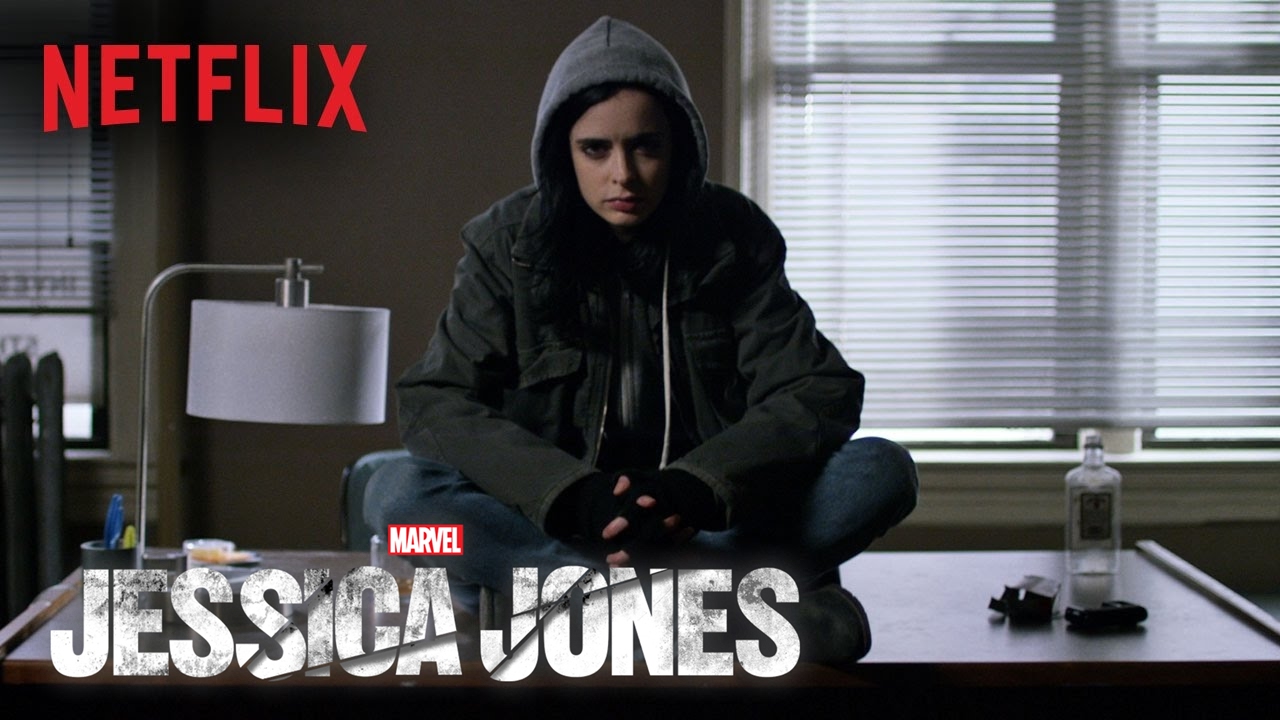
Before I say more, here’s the requisite backstory you need if you’re not steeped in these characters: Jessica (Krysten Ritter) is a sorta superhero who tried to make a go of being heroic at one time and it just never really worked out for her. She now uses her smarts, considerable strength, and not-at-all mastered ability of flight (she calls it “more like controlled falling”) as a private eye, albeit one who has yet to make too much of an impact. As such, she is outside the superhero game. She has no costume, no fancy globe-trotting adventure fighting large Evil Empires. What she does have is an enemy in the form of Kilgrave (David Tennant) who can compel anyone listening to his voice to do whatever he tells them to do. Jessica herself is a former victim of Kilgrave’s, having been compelled to be his companion before breaking free.

And right there you have the seeds of what makes Jessica Jones so interesting to watch. This is a show about a hero who has PTSD and has turned into her own best self-destruction machine trying to deal with it, hiding her damage in violence, cynicism, detachment, and literally gallons of hard alcohol. And while both the noir and superhero genres have their fair share of heroes with a dark past, Jessica Jones elevates both by calling out the horrors of her past more than is typically done. She’s a rape survivor, the only member of her family to make it out of a fatal accident, and a manipulator who veers closely to doing to others what was done to her.

Actual excerpt from the comic detailing Jessica and Kilgrave's interactions. Archie, it ain't.

Jessica as a character fits nicely into the anti-hero trope, but the show consistently moves her beyond a caricature and into someone who feels real. Her rape is a great example; writers often make the mistake of using a female character’s rape as a way of depowering her to exploit her vulnerability. In a lot of writer’s minds, rape = Strong Female Character. Jessica Jones avoids this by exploring how affected Jessica as a person is by her captivity, particularly given that it was a captivity that invaded her mind first and foremost. Her physical and mental rape isn’t something that motivates her; if anything she’s running from it. Which is to say, she’s behaving like a real human person and not a convenient backstory generator.

A show anchored by a fully-fleshed out female character is, by itself, almost unseen even in our supposedly enlightened times. Now consider that the other lead characters in this show are a black man (Luke Cage, a perfectly cast Mike Colter), a second white woman (Trish Walker played by Rachel Taylor), a lesbian woman (Carrie-Anne Moss), and another black man (Eka Darville) with a primary assist from a Latina woman (Rosario Dawson, reprising her Daredevil role) and you’ve got a cast not normally assembled. Only one main character is a white man with one other white man in a supporting role. For the Marvel Cinematic Universe, which has too often veered into looking like it was filmed in the same New York that was occupied by the cast of Friends, this is remarkable. And like Jessica, the other characters more often than not defy the traditional ways that they are represented, allowing them to have their own stories.

Consider this: the show has a woman and a black man, two populations that are traditionally expected to be docile and unobtrusive in “polite” society, to actually get violently angry. Jessica doesn’t just fight to protect herself; sometimes she does it simply because she’s pissed and needs to hit someone. Her on-again, off-again love interest Luke’s anger is portrayed more righteously, but just the image of a large, intimidating black man being mad is itself subversive given that it’s shown to a presumably majority white audience. (It’s worth noting that this same construction was illustrated even more explicitly this fall in DC’s Supergirl in what was probably one of the best scenes that show has put out yet.)

That sound you're hearing is Donald Trump supporters freaking out over this.

The feminist interpretations of this show are clearly everywhere. The motif of Kilgrave’s commands to Jessica that she smile more will on their own launch a thousand women’s studies theses. What really made me fall for the show though had to do with how they integrated this punky little story into the larger MCU narrative. I said earlier that the show both made the Marvel universe bigger while subtly smacking it across the face at the same time. It accomplished this by allowing consequences to actions that actually raise the stakes of the story and establish tension. Unlike the big movies, you can watch Jessica Jones and not be sure what’s going to happen to the characters. Survival isn’t an assured outcome and even if a character lives, he or she may not be able to overcome what has happened. Jessica and her compatriots are underdogs in the truest sense. They’re the characters literally crushed by their big screen counterpart’s actions, as several characters make clear when they outline the people they lost in the Avengers’ destruct-a-thon battle for New York in their movie. The show is an antidote to the high-contrast, fluffy spectacle of the movies.  If the Marvel movies feel like they’re written by comic book writers, Jessica Jones feels like it’s written by the staff of Orphan Black. Not to put too fine a point on it, it’s also worth mentioning that this is the first, yes first, of all of Marvel’s productions to feature a female lead character. Scarlet Johannsen’s Black Widow hasn’t even managed to get her own movie yet.

"We're both multi-faceted adults with independent stories. So, should we talk about a man right now or...?"

To be sure, Jessica Jones has its flaws. The story takes off like a rocket and finishes like an explosion, but unfortunately there’s a little sputtering in the middle when the show seems to circle itself needlessly. A few storylines never quite take off; Kilgrave wants photos of Jessica enough that he manipulates the people around her to provide him with them covertly but once he’s found out the reason for this is never really allowed to breathe. Likewise, some of Jessica’s neighbors seem tossed in more to provide things for the show to do rather than actually serve the narrative. In general, the pacing of the show can become uneven at times. For what the show manages to pull off, however, it’s kind of brilliant.


So far, Marvel/Netflix have been mum on whether or not they’ll green light a second season for the show. Netflix is notorious for keeping its ratings close to its chest, so it’s hard to get a sense of how well the show performed in the traditional sense, although critical response has been largely very positive and the fan response was equally upbeat. What it will likely come down to is the extent to which Marvel is willing to deviate from its established schedule of shows with Luke Cage, Iron Fist, The Defenders, and Daredevil’s second season already in the pipeline. And while Jessica has been intended to play a role in the upcoming The Defenders series, it’s still unclear of the next time we’ll see her or get more from her story. 

Wednesday, January 06, 2016

Making a Murderer

This post contains discussion of the basic plot of Making a Murderer. I don't reveal the outcome of the series or linger on too many details, but to err on the side of caution I would characterize it as containing mild spoilers. 

Unless you've been living under a rock, you've heard of Netflix's original documentary series, Making a Murderer. Shot over a period of 10 years, the 10 episode series relates the tale of Steven Avery--a man wrongly imprisoned for 18 years for sexual assault, exonerated by DNA evidence, and rearrested for murder only two years later.

There's no doubt the True Crime genre is hot right now--last year Serial and The Jinx had us all on the edge of our seats. And Americans have always been enthralled with true tales of violence and death. Just look at the popularity of series like America's Most Wanted, Unsolved Mysteries, and the immortality of killers like Jack the Ripper. I don't know what it is about crime, procedurals, and serial killers that fascinates us so. Maybe it's about turning a mirror on the worst part of humanity that titillates us...and makes us feel better about our own ordinary lives.

Making a Murderer does not provide this kind of escape. The mirror isn't turned on the dark heart of one person, rather the mirror shows the unfortunate reality of our own justice system. There is a myth of American justice, of the presumption of innocence, but if you take one thing away from Making a Murderer it should be this: the system is broken.

I went into Making a Murderer not really knowing what to expect. I had read some reviews so I knew the plot basics (though it feels weird to call people's real life tragedies "plot"), but nothing can really prepare you for the way things unfold in the series. Disbelief, shock, anger, rage, disbelief (again), sadness...these are all feelings I experienced. I also talked to the television a lot while watching. Things like, "I can't believe this," and a lot of profanity were thrown around my apartment.

This is pretty much what I was thinking every time one of the Sheriff deputies was on screen.

In case you didn't know this about me, I'm a lawyer. I took criminal law classes, I participated in trial competitions, and I worked with my state's prosecutors during law school. So I wouldn't call myself naive or uninformed about how our system works. But I was still completely gobsmacked. Maybe because I am a lawyer and an officer of the court, I believe in the fundamental rightness of the system. I believe that most of the time we get it right and the cops and courts WANT to get it right. So the idea of a conspiracy to convict the wrong guy just seems so unlikely as to be fundamentally inconceivable.

At least...I used to believe this. Now I only feel sad. Because I think I was wrong.

I have read tons of articles about the racism and classism inherent in our system. I've shared some on Facebook. I know how the deck is stacked against those who are poor or not white or looked down on as the dregs of society. I know that the death penalty is not applied fairly and I know that the drug laws aren't either. But to see how everyone and everything in the system works against Steven Avery and his nephew at every step of the process, even one of their own defense lawyers, puts everything into cold, stark, reality. I now feel sad and cynical.


I've spent a lot of time and words so far talking about how the show made me feel and how it has altered my personal perception. But is Making a Murderer actually any good? Should you watch it? Yes. In fact, hell yes. This is a show that I now feel obligated to recommend to you. Not just because it's a masterful work of documentary film making (it is) and not just because it is utterly compelling (it is that too), but because it feels almost like it should be required viewing if you want to call yourself knowledgeable about the country you live in. Sure, Steven Avery is just one man. But if you think this couldn't happen anywhere in America, then you are deluding yourself.

The question a lot of people ask upon finishing the series is, "so did he do it?" My answer is "I don't know." But that's not even really the point. I don't want to say it doesn't matter whether he did it, because that is a gross insult to the victim, Teresa Halbach, and her family. Teresa Halbach died. Whether Steven Avery is the one who killed her or not, there is no doubt that she died horribly, that her family went through hell, and that they deserve to know who perpetrated this crime and have some measure of justice (or maybe revenge?). But the fact is, this documentary centers on Steven Avery, not Teresa Halbach.

When I say that it "doesn't matter" whether Steven Avery committed the crime in question, it's only because after watching hours of footage detailing the evidence and the trial in this case, it all seems almost preposterous. I won't give away the ending here, and just like whether he did it doesn't seem to matter, the outcome has almost the same feel. It's not the ending and the verdict that you remember, it's the sad journey that got you there.

The series doesn't cover all the evidence, and maybe it would be impossible to expect it to. I encourage you to check out Vulture's excellent coverage of the show which includes recaps of what is left out of the episodes. Some of it helps Steven's case, and some of it hurts it. But even if you know everything. Even with ALL the facts...it's clear the police and the prosecutor and the system were out to get this guy.

Was it because he was poor? Has a low IQ? Or that Steven Avery had the audacity to challenge the authority in his county and state with a 36 million lawsuit in response to his wrongful incarceration? I don't know. Maybe all of the above. But if you can watch Making a Murderer and truly believe that nobody planted/tampered with/or otherwise altered the evidence in the case, please let me know who you are because I think you might be a unicorn.

At the end of the day, I don't know how to react to this show. I am angry, but I am also sad. It's not because of the outcome, which again I won't discuss here, but because this happened at all. Because Teresa Halbach died, because it's clear to me the authorities conspired against Steven Avery, because I now believe that this kind of thing probably happens frequently. I don't know what, if anything, can be done to prevent it from happening again. Probably nothing. But I know that I can tell you to watch this show and it might just change the way you think. And isn't that the best thing you can say about a documentary?


Tuesday, December 08, 2015

The Wonderful Wizard of Racism

So, I’m not a huge fan of musicals. There’s just something about the level of earnestness that a musical has to have in order to work that puts me off. Unless we’re talking about Soundheim. Seriously, there’s something going on in that dude’s brain that I hope he’s addressing with a therapist. That all said, when you get a musical that intersects with biting social commentary, I’m totally drawn in. Which is why I watched The Wiz Live! last week and am here to talk to you about it.

The Wiz Live! is the follow-up to The Sound of Music Live! and Peter Pan Live! and precedes next year’s Grease Live! All four are created by NBC which is clearly concerned about the dearth of exclamation points used in modern writing. But the biggest thing that The Wiz Live! has managed to do is thoroughly out-perform its two predecessors. By almost all measures, be they social media, ratings, or critical reception, The Wiz Live! was significantly better received than either of NBC’s previous live musical outings. Unfortunately, there are always jerks waiting in the wings to yell loudly about things.

Le Sigh.

I’ll talk about the jerks in a second, but first let’s focus on the production itself. Simply put, the show was thoroughly entertaining. First, consider the cast: David Alan Grier as the Lion, Mary J. Blige as Evilline (The Wicked Witch), Uzo Aduba as Glinda, and Queen Latifah as the Wizard. Dorothy is played by Shanice Williams, an actress who isn’t even 20 and for whom this is her first substantive production and she still managed to hold herself up next to these industry veterans. It almost goes without saying that the costumes and sets were going to be gorgeous and camera-ready, nevertheless they still knocked them out of the park. The word “ambitious” has been tossed around a lot in describing the production, but it is an accurate one that served it well.

I'm not at all ashamed to admit that I want the Wizard's chair in my apartment.

That’s not to say that there weren’t a few cracks – on one or two moments, the actors clearly stepped on each others’ lines or misspoke slightly. A mic dropped into the frame at the beginning of the broadcast. The director also relied too much on camera tricks to accomplish some of the special effects, a particularly confusing decision since those effects are all visible onstage whenever the musical is produced outside of a television studio so it’s not like they’re that hard to create. Those are generally trifles when compared to what the musical did right, however.

But of course, you can’t talk about The Wiz Live! without talking about racism. If the predominant storyline that came out of the production was generally about how good of a production it was, the second biggest story was the extent to which people online who don’t know their heads from their asses seemed to think that casting an all-black version of The Wizard of Oz is somehow an example of “reverse racism.” Twitter and other sources went nuts on this with lots of folk demanding that someone, anyone, should make an all-white version of The Wiz to protest this craziness.

"Should we tell them about MGM in the 1930s?"

I’m just old enough to remember the original version of The Wiz with Diana Ross and Michael Jackson airing on television when I was a kid. When the original film was created, it was actually the end of something; the movie marked the conclusion of an era of films that centered on African American characters and settings, beginning with the Blaxploitation films of the 1970s. Blaxploitation as an era of filmmaking has always been controversial, being seen alternately as both empowering to African American actors, filmmakers, and audiences and harmful to them. (See modern discussions on feminist pornography for a current example of the same argument.) The Wiz made for an odd, if likely unintentional, capstone to that movement. It is hardly the first film people are going to think of alongside Shaft, Super Fly, Blacula, Foxy Brown, or even Dolomite. Nevertheless, it remains one of the last major films to fall firmly into that world until later resurgences in the 1990s and beyond.

Given the original movie’s place in black history and black entertainment, it’s interesting that the modern version made some significant changes to its 1970s forbearer. The original musical and film was firmly grounded in the African American experience of the 1970s, harkening back to L. Frank Baum’s novel in broad strokes but bringing the action, settings, and characters into a thoroughly more urban environment. In it, Dorothy is 24 years old, a teacher, and living in Harlem. The version of Oz she travels to is a Through The Looking Glass version of New York City. Munchkinland is an inner city playground and the Munchkins have been transformed by the Wicked Witch of the East into graffiti because they tagged the park. The Scarecrow is made of garbage, the Tin-Man is found in an abandoned amusement park, the Lion has been hiding among the stone lions in front of the New York Public Library. The four have to contend with an evil subway line, a motorcycle gang, and “poppy girls”, prostitutes working Times Square who spray poppy perfume. The Wicked Witch of the West is a sweatshop owner. Oz isn’t a place that’s arrived by magically; Dorothy gets there by stumbling through a snowstorm below 125th Street, an area of the city that she’s literally never been to.

I've had this exact same look while riding the B train.

By contrast, The Wiz Live! returns the action to a setting that’s much more in-line with the source material. Now, Dorothy, like her white counterpart from the 1900 novel and the 1939 film, lives in Kansas and is trying to get to Omaha. This Oz looks much more like Judy Garland’s, all psychedelic colors and rural environments. It’s a much more traditional approach that both undercuts the interpretive power of the 1970s film and adds to the value of the original story. Both approaches show that the story can thrive in different settings; the 1970s film transplants the story full cloth into a different world where the modern take applies a different cultural worldview to a predominately white world.

Fierce.


All of which is kind of what makes The Wiz Live! feel so especially different. Instead of being a closing scene, this time the musical is clearly part of the opening number and comes as a vanguard of a new movement toward televised musicals. Second, it layers the experience of a minority population onto a majority’s worldview. Much has been made in the past eight years of the United States becoming a “post-racial” society. While I don’t believe that’s entirely true, we are starting to see pools of that prospect begin to seep into the greater fabric of American culture. Particular in that goal of being “post-racial” is the understanding that no culture speaks with one voice and that there are multiple stories within each cultural group, oftentimes ones that are contradictory. The Wiz Live! and its success is a welcome contributor to that notion.  

Tuesday, December 01, 2015

Jessica Jones: The TV Slut Chat

After binge watching Netflix's Jessica Jones all weekend, fellow TV Slut, Ben, and I sat down and had a good old fashioned chat about it. It's mostly Ben using big words and having deep thoughts and me acting like a fool (typical day at the office), but I think we occasionally come up with some insightful things to say. Enjoy!


Maggie Cats(M): So what did you think of Jessica Jones?

Benjamin (B): I liked it a lot. I think I liked it more than Daredevil, which is saying something. The first thing I think about, though, when I read all the think-pieces on Jessica Jones, is that I feel calling it a "noir" is kind of on the wrong track, thematically.It's really blurring the lines between a detective story and a horror story which involves detective work, like The Ring.

M: I agree with all that and getting back to Daredevil briefly, it's clear that the shows both exist in the same world, but their "heroes" are wildly different. Jessica Jones is even darker and bleaker...and she's a type of hero we haven't seen before (at least in the Marvel cinematic universe). I love how broken, traumatized, and scared she is. She's one of the most powerful women in the world and she's basically jumping at shadows and drinking herself into oblivion.

B: Frankly, except for some cop shows which (mostly deservedly) had only one season before being consigned to Netflix (e.g. Hack), we don't have crime-fighters who are basically messes.

M: Exactly. The entire season is really about her finding her own agency again and learning to trust people. I deal with PTSD a lot in my job, and in my lay opinion, they did a nice job with a realistic portrayal of someone with this type of trauma. Well, not mind-control trauma, but you know what I mean. We don't get a lot of THAT in my line of work.

B: I thought that was all pretty good, too. I was a little worried up until about episode 8 that Jessica Jones, for plot reasons, seemed to have it too well together, but then she did some really dumb self-destructive stuff that you do when you can't keep it together.

M: EXACTLY. And the one thing the writers had to do to make the viewer buy into  this season was establish why you couldn’t just shoot Kilgrave and call it a day. And I think that's why Hope was such an important character. Kilgrave had to stick around to get Hope off the murder rap--which clearly represented Jessica's one chance at redemption as well. After all, without her the show would be over in one episode. "Jessica tracks down the guy who violated her and puts a bullet in his head." Done. So how do you keep the story going? Come up with a compelling reason to make her want to keep Kilgrave alive.

B: It's also true that, until Jessica Jones gets Kilgrave to run amok in NYC, if she just killed him, no one would really believe her about his powers and therefore other than Trish they wouldn't believe that she didn't want to do all the stuff Kilgrave told her to do. Many of the people in Jones' orbit - I'm thinking Hogarth and Cage primarily - only give lip service to, "oh, yeah, Kilgrave can control minds" until they encounter him directly.

M: Everyone told Jessica that they understood Kilgrave was bad and the things he did were horrible. But nobody REALLY understood the full extent of it until they were victims of his powers themselves. It's another thing that felt very real and powerful; until you have experienced something like that, you can't really appreciate the true horror. I think the guy who was forced to give up his coat on the subway clearly had it the worst. I mean, can you IMAGINE? Oh, the humanity.

B: Note how he kept going to the meetings, though. Not being able to be an asshole when he wanted to really took a lot out of him.

M: The show is certainly dark and I wouldn't call it funny, but there are little moments like that are funny in a kind of Fargo-"aren't people ridiculous" type of manner.

B: I actually thought this show was more "accurately New York" than Daredevil. The real estate looked realer, the weirdos seemed more like the folks I encountered on the street, etc. I and most of the people I knew lived in buildings like the one Jessica Jones lives in.

M: That takes us back to your first (or was it second) point, I actually found Daredevil much more noir than this in terms of style and lighting. Sidenote: I think Jessica Jones and Veronica Mars would have gotten along well. 


**POTENTIAL LATER EPISODE SPOILER AHEAD**Shifting gears a bit, were you surprised when Rosario Dawson’s Night Nurse showed up?

B: Slightly. I am familiar with the MCU movie schedule, so not exceptionally surprised since Since Daredevil, Luke Cage, and Jessica Jones are all in the Defenders movie together. **END LATER EPISODE SPOILER**

M: I was shocked, I had no idea there would be overlap. I knew they would eventually come together, but was surprised at a cross-over character at this point. Speaking of Luke Cage…any thoughts? I thought he was hot as hell.

B: He is an amazingly attractive man. It seems, though, in Jessica Jones, if you're a man without super powers, you're mostly incompetent. And not worth talking to for the most part. It's refreshing, really.

M: I read somewhere online that this series actually fails the Bechdel test for men. Which delights me. It's so great how Marvel is getting to explore all these new types of characters and storytelling on Netflix. It almost (well actually, not almost) makes the movies look kind of hackneyed in comparison.

B: I wonder how much of this we would have seen had it not been on Netflix or a similar streaming service. This is a "prestige TV"-level of faith in the auteurs.

M: Netflix (and to a similar extent subscription cable) are really redefining what makes a successful tv series. Network programming looks sloppy and poorly planned in comparison.

B: The problem, I think, with network TV is that, like any legacy media, they would like to keep the same level of market share. So NCIS and other pleasers of everyone over 50 keep coming because the newer market is so fragmented. Or riffs thereon, like Mysteries of Laura.

M: It will be interesting to see at what point streaming television stops being considered "new" by more established (i.e. older) viewers. And oh my gosh, I can’t believe we haven’t talked about David Tennant yet!

B: I want to note that the first time we see his face he's licking Krysten Ritter's cheek in classic "creepy pervert" style. Also, we do not see the "soulfully sad" eyes he uses in pretty much everything else he's in.

M: I think David Tennant is a great actor, but I don't think he has a lot of settings. So this character felt very derivative of the Tenth Doctor to me--if the Tenth Doctor was a total sociopath. So what I am trying to say is that I found him really fucking scary. And I think the show made an excellent choice by keeping him basically off-screen for several episodes. We only hear of what he does from his victims; so you aren't REALLY sure what he's going to be like. And then within a few seconds of meeting him, he casually tells a guy to throw hot coffee in his face. As the audience, in that moment, you are like, "oh, I get it."

B: I had a different take on the buildup. Because we see early on how pervasive Kilgrave can be in recruiting small armies of agents, and how insidious their programming can be, when he's not on the screen he's sometimes a lot more dangerous-seeming than when he is. I felt Jessica Jones' paranoia for those first episodes; I totally understand why she wanted to book it to Hong Kong.

M: That’s an excellent point—there’s a lot of “Kilgrave can be anybody.”

B: AND HE IS. They just don’t say it.

M: He’s definitely playing a long game and Jessica is more flying (controlled falling) by the seat of her pants. I mean, she’s basically controlled falling the entire season. OMG SYMBOLISM.

B: It's also good to note that what Jeri Hogarth says about Kilgrave is also true - his ambitions are kind of small potatoes. Darkseid spends like years and years of DC comic time trying to get the Anti-Life Equation, which is basically what Kilgrave has.

M: I wonder what traps Kilgrave has left for Jessica in season 2? There was a lot of time he had to whisper in people's ears, you know. I am sure he made some contingency plans.

B: But that would require he consider the potential that he would actually fail. I don't know that he ever really does. You can see how sort of anti-charming he is when he can't use his powers. I think one of the reasons Kilgrave is so after Jessica is that she could escape him and that just makes him crazy. He's not really interested in controlling the world, he's interested in what he wants now and if he doesn't get it, he throws a fatal tantrum.

M: His emotional development definitely got stunted. Right about the time his parents started stabbing needles into his brain stem.

B: He's like some philosophers' descriptions of demons: unable to manifest the virtues of patience, prudence, etc. except for sheer force of will.

M: WOAH. What? It’s a Sunday afternoon man, you can’t get that deep with me. STOP IT. Let’s talk about how hot Luke Cage is again.

B: He has an amazing chest. So, on that front, what did you think of the first sex scene where Jessica Jones says "you won't break me," and Luke Cage insists that he probably will? And then you see in Krysten Ritter's face like, "man, this is NOT DOING IT FOR ME."

M: I like how I knew they both had super powers, but neither of them knew the other one did. Basically, the first sex scene felt like foreplay for the later sex scene. When they are like, "ah yeah now I can go for it."

B: And then destroy things.

M: So instead of the first sex scene feeling like a culmination of something, it was just really just whetting the appetite.

B: Did you notice that Trish is also super-assertive during sex?

M: UM, YEAH. There is one part right after when she, Simpson, and Jessica are discussing the plan to get Kilgrave when she is like, "Hey, last night was fun, but that doesn't mean I want to hear your opinion.” I was like, GO GIRL.

B: Well, Trish is super-supportive of her BFF/sorta-sister. And Simpson is never right about anything ever.

M: And here's the real crazy thing: it's not like the women in this show are just "acting like men" or whatever you want to call it. They're all just ACTING LIKE PEOPLE. Who are flawed. And kinda broken. And it's wonderful.

B: Yes. They’re not just made up to be “masculine.”

M: So of course Trish is going to back Jessica, and you can shut your mouth, Simpson. This is a great example of how to do blind casting (changing character's genders and races from the source material) correctly.I believe these people were the right fit for the part and make Jessica's NYC feel more authentic. Sure, it's not perfect, but definitely a step toward more diverse storytelling.

B: I know that I really liked watching Trinity from The Matrix and Calamity Jane from Deadwood yell at each other.

M: YES.


And we’ll leave you with that mental image since that’s where the discussion pretty much stopped. We didn’t get a chance to do much summing up (since Ben’s daughter was getting squirmy in his lap), but needless to say we both loved Jessica Jones. And saying that we liked it even more than Daredevil is high praise indeed!

You can watch all 13 episodes of the first season of Jessica Jones on Netflix streaming.

Wednesday, November 25, 2015

Mad Men: Obergruppenführer edition

Guest-poster and Amazon Prime subscriber Zach is here to tell you all about Man in the High Castle. Ever imagine what would have happened if the Axis won WWII? Amazon has you covered. --Maggie Cats

Truth is, I’ve been waiting for Amazon’s adaptation of Man in the High Castle for some time; it’s one of my favorite books, and I’ve been hearing about it’s expertly crafted dystopian sci-fi world since September. 


The plot in two sentences: In this world, Germany got the atomic bomb first, and used it on Washington, DC, ending WWII and dividing up the United States into the occupied “Greater Nazi Reich” and the Japanese puppet state, Pacific States of America. The series brings us in during the early 1960s, focusing on the capitals of each of these states, New York and San Francisco. 


The two main characters are Juliana Crain (Alexa Davalos), who's trying to figure out exactly what her newly deceased sister was wrapped up in, and Joe Blake (Luke Kleintank), a Nazi double agent posing as a resistance fighter. 

Will you like it? If you like lush, gorgeous detail, and the intersection of 1960s culture and consumerism colliding with Nazi/Japanese domination, then yeah. The series provides a rich crop of easter eggs and clever visual asides and it's clear the show creators really thought through this alternate universe. I found myself pausing and rewinding constantly, checking out small amusements such as a little boy reading a copy of the kid’s magazine, “Ranger Reich.”


Also, rocket planes are a thing.

Beyond the detail though, is a near-constant gripping drama, with the only lull spent in an early episode in Canon City, a “wild-west” located in the neutral zone of the Rocky Mountains, the last refuge for outcasts (elderly, albinos, Jews, etc.) who would be institutionalized or exterminated in either state.

Drama’s not your thing? Then enjoy the rich secondary characters (who sometimes outshine the leads). Let your stomach get queasy when you find yourself essentially agreeing with the family values espoused by the Rockwellian Smith family, the paterfamilias being a strict but kind husband and father, but also the head of the SS for the Greater Nazi Reich with a prevalence for sadism. Revel in the fascinating social commentary on race and gender--at one point our lead characters are led through a “white dancers only” fetish strip club, run by the Yakuza. The series seems tailored for us to examine our own America through our glimpse at this fictional world.

For me, the only downside to this adaptation is that the eerie version of “Edelweiss” featured in the opening credits is my new nightmare fuel. Here’s hoping it can be yours too.

Man in the High Castle is on Amazon.com, and is free to Amazon Prime members. All episodes are available for streaming Nov. 20th, 2015.


Tuesday, November 24, 2015

I Am Strange

Close viewers of BBC America or just anglophiles in general may have noticed this past summer that Jonathan Strange & Mr. Norrell got the miniseries treatment from the boys over in London.  Because I love a miniseries and alternate history, this one was high on my must-watch list. And then, natch, I didn’t get around to it until after the weather started to get sucky. Sigh. At any rate, the miniseries was glossy, composed, and very, very English.

Before I say anything else, I should mention that I actually haven’t read the book, so my thoughts are purely limited to the TV show. My understanding is that, despite the show’s seven hours of total screen time, there are still loads of plot points and character bits from the books that were condensed, eliminated, or otherwise altered in the final product. Though, honestly, given the show’s obsession with pondering over what it means to be English, I have to imagine that’s for the best. (Readers, please correct me on this if instead you believe what was actually eliminated was more germane to the plot.)

At any rate, Jonathan Strange & Mr. Norrell is set in 19th-centruy England during the Napoleonic Wars. It presents an alternate history of England where magic, formerly thought to have been eliminated from England a few hundred years before, has begun to make a comeback in the form of Mr. Norrell, a fussy English gentleman who has gleaned how to work magic from his massive collection of books. Being the only Magician in all of England, he somewhat reluctantly goes about reviving the practice of “English Magic”, offering his services to Lords and Royals as he can find them. Mr. Norrell is fastidious about preserving the English decency that he feels magic requires, though to be fair we never really see any examples of what non-English magic would be or why it would be less preferable.

"Yes, yes. Much magic. Quite special. Tea, please?"

Just when Mr. Norrell is about to make good on his fame and fortune as the sole Magician in the land, in comes a young gentleman of property (of course) named Jonathan Strange. Strange it seems has also become awakened to magic after hearing a prophesy from a street vagrant. Like you do. Strange becomes Norrell’s pupil, though the two initially disagree about the importance of a character known as The Raven King. Strange believes The Raven King to be the source of English magic, whereas Norrell sees him as sort of an enemy of the state for practicing a wilder, less organized (read: less English) magic. This small theoretical difference eventually grows into a much bigger rift that generates much of the action for the story.

"Mine is a dashing and brazen magic, much like my waistcoat."

Things are further complicated when Norrell, somewhat out of his depth, is asked to resurrect the wife of a prominent Lord. In doing so, Norrell brings forth The Gentleman, a fairy who agrees to revive the Lady, but at a cost of half of her life.  Unable to admit defeat, or that the magic that returned the Lady to life wasn’t proper English magic but the magic of Faerie, Norrell allows the Gentleman more interest in the “real” world. The Gentleman also soon develops designs on Strange’s wife Arabella as well as a servant in the Lord’s house. And from there the fun starts.

Pictured: Not David Bowie.

The story begs and borrows a lot from earlier English literary traditions. Strange is a classic Byronic Hero; the emphasis on structure and Englishness flies straight out of the Regency and Victorian periods where England was the unquestioned capitol of the world. As such, it spends much of its time focusing on bringing those concepts into a fantasy story, allowing the more fantastic elements to serve as stand-ins for England, its virtues, and its faults. Which sounds incredible, but after about hour four you really do start to feel a little like you’re listening to a stuffy literature professor ramble on about the Romantics when all you really want to do is go outside because it’s such a nice day out.

Plenty of aspects of the show work very well. It’s gorgeous to look at with a very refined and specific art direction that is quite eye-catching. The visuals are lush, costumes are gorgeous, special effects FAR better than I thought they would be. Performances are strong, particularly Eddie Marsan as Mr. Norrell, who nails the fussy, quick-to-offend, yet vulnerable and self-doubting character so ridiculously well that I was completely ambivalent about how to feel about him the entire time watching the show. He’s not exactly an antihero nor a hero outright; that the actor is able to walk the line between someone you really want to know more about and someone you just want to punch in the face is impressive and keeps you paying attention to him.

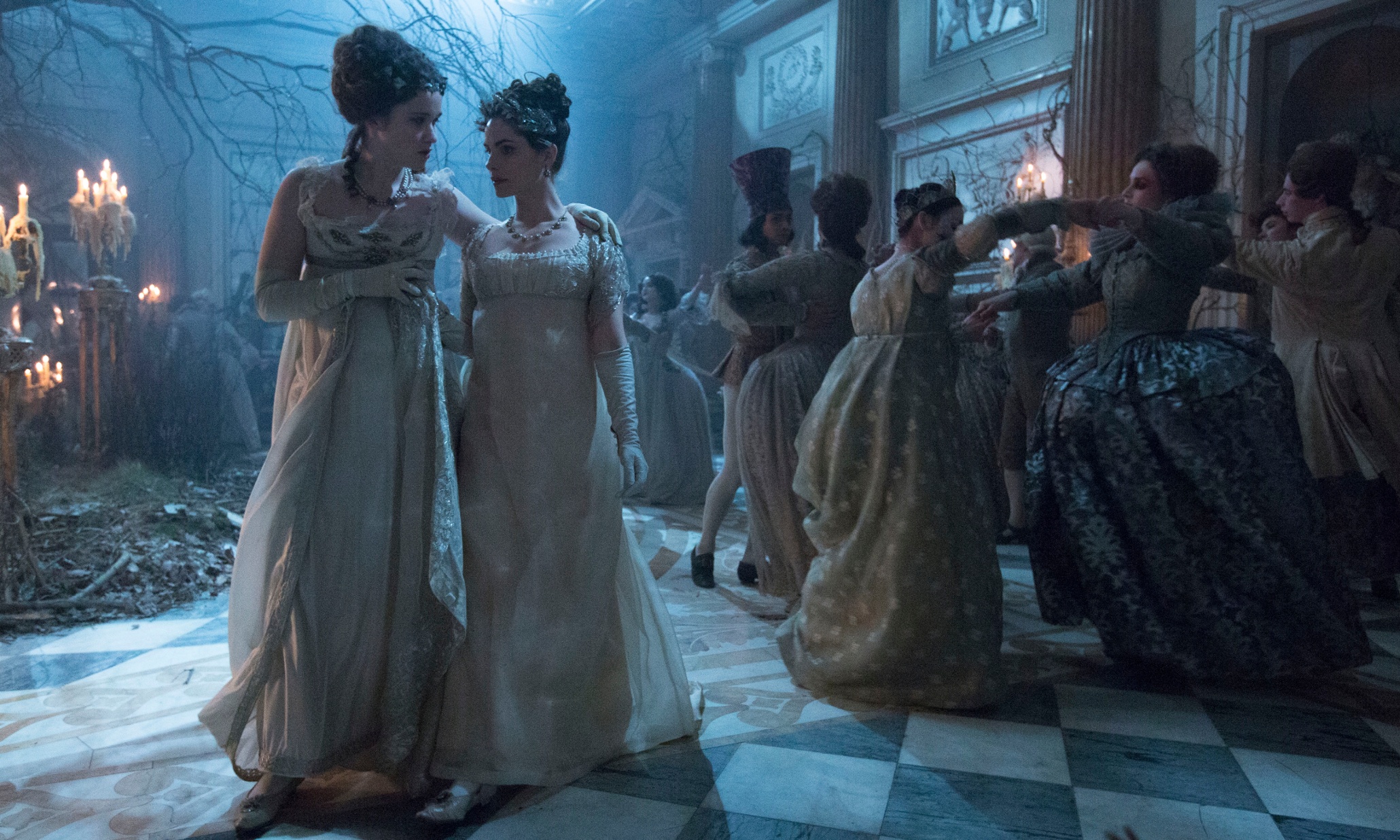
There's also a lot of dancing at a supernatural ball in Hell. Seriously. 

Where I think the show falters is in taking what is arguably an incredibly immersive reading experience and translating it to a viewing experience that doesn’t have the same heft. The novel takes a story about defining what it means to be English and makes even that process as English as possible, purposefully opting always to describe the magic in the most mundane and muted ways possible. The novel also contains more than 200 footnotes, giving it the veneer of a researched scholarly paper and further bolstering its detached, English sensibility.

Did I mention there are also zombies?

That creative interpretation of a fantastic story is wonderfully ironic on the page and doesn’t translate at all to the screen. Which is understandable. It’s not a good idea, cinematically-speaking, to tell a story about magic and then downplay the magical effects. So where the book would take an almost distasteful approach to describing a scene where Jonathan Strange conjures horses out of sand and sends them charging into the surf to right a frigate that’s shoaled just off the coast, the show is left with no option but to make this a fantastic event.

All of this will depending on your need for the show to be faithful to the book, of course, or your affection for the experience of reading the book to be accurately recreated in your watching of the show. Classic Your Mileage May Vary situation.


Bottom line: If you desperately can’t wait for the Harry Potter prequels to come out and really need a good dose of English people talking about magic and you’ve always nursed a crush on Count Vronsky, Mr. Rochester, or any other literary brooder of that era, this is a fun way to spend seven hours of your time. 

Friday, November 13, 2015

Supergirl

Supergirl feels like a show from another era. Sure, it's got top notch special effects and aside from an awkward green screen here and there, it looks amazing. And nobody is sporting a beehive or a mullet or feathered bangs. But when I watch Supergirl, I feel like I am watching one of those action adventure shows from when I was a kid. The A-Team, Macgyver, or Star Trek. Oh, and of course you can't forget Wonder Woman in that list.

What is it about Supergirl that makes me feel so nostalgic? I think it's the overall tone, and forgive me for using this term, how it feels so earnest. It's certainly not cool to fight for truth, justice, and the American way (which is why Superman is supremely uncool), but I remember watching shows with my family as a kid that held up these ideals. If you were in trouble, and you could find them, you could hire The A-Team. Macgyver used his brain to save others, and you can't get more idealistic than Star Trek.


This doesn't have anything to do with the post. I just wanted to put a picture of Richard Dean Anderson on here.

Supergirl inhabits the same universe, where a young woman with unlimited cosmic power* just wants to use her abilities to help people. I imagine little girls, their brothers, their parents, and all other members of the family watching this show together. Cheering for Kara to catch the bad guy, to realize her cute friend likes her, and to show the doubting secret agent-types that she can save the day on her own.

There's no doubt in my mind we are living in a Golden Age of Television, but everything is just so dark. I'm all for hard-hitting drama, but sometimes you need a break from the bleak. Supergirl is just the thing: an adventure story with a strong (literally strong) female lead who saves the day and loves doing it.

OK, so let's talk specifics. Will YOU love Supergirl? Like I said above, it looks great. Sometimes the dialogue is a bit clunky and I'm not sure we needed a love triangle (though teens will probably eat it up). If you find the basic plot of The Devil Wears Prada untenable, then you might not be a fan of Kara's day job--executive assistant to the demanding media mogul, Cat Graham--but I for one could watch Calista Flockhart chew the scenery and bitch out her underlings all day long. And it certainly makes Kara relateable; who hasn't had a job with a bad manager?

If you also prefer your drama on the more existential side of the spectrum (The Walking Dead, looking at you) you might find Supergirl a bit too...nice. But if you're looking for a good old fashioned adventure, this could be the show for you.

Supergirl is juggling a lot of elements, but as the writers find their legs I think it could really be something special. The show and Kara both need to figure out how to better balance her freelance superhero work (and family issues) with her role as an agent with the black-ops agency tasked with protecting Earth from alien threats. This is a minor quibble though.

At its heart Supergirl is a fun throwback to the action adventure series of old improved with modern effects and more inclusive storytelling. Perhaps the greatest compliment I can pay Supergirl is that at the end of the first episode I wished this show had been on when I was a little girl. It would have been nice to have someone like Kara to look up to.

Supergirl airs Mondays at 8PM on CBS.

*and more than itty bitty living space based on her palatial apartment in National City.

Thursday, November 12, 2015

Through the Looking Glass, Darkly

Okay. So. I watched Black Mirror. And while I generally liked it, I don’t know, you guys. There’s some serious shit going down in this one that needs talking about.  And that shit is all about the way the speculative fiction show from England’s Channel 4 treats women.

So, here’s the thing: there’s really no way I can talk about the misogyny issues in Black Mirror without getting spoiler-y, so I’m breaking this into two sections; The first will be spoiler-free (and largely reflect that things about the show that I really liked) and the second will unpack the, let’s call them problematic, issues the show struggles with.

Metaphor! Metaphor!


Part I: Stuff That I Like! (Spoiler-free!)
Black Mirror has been compared positively to The Twilight Zone, something that to my mind is more or less accurate. Just like its predecessor, Black Mirror is an anthology series with each episode being a different story with a different cast and a different setting. Unencumbered by any kind of continuity, it makes for an easy watch knowing that you literally don’t have to know anything at all going into any given episode.

What the show really excels at is being unnerving, which is different from being scary or creepy. Black Mirror is not a horror show; there are no monsters or ghosts or demons or other things hiding under the bed just ready to pounce. If anything, the villains in the show are to the letter all human. For as much as the show has been sold at least partially on the notion of it being about the dangers of technology, the show itself is pretty agnostic on that point. If anything, it suggests that technology is a blank thing, neither good nor evil. In each story, it’s always a human who ends up being the scary one. That notion of ten minutes in the future and There But For the Grace of God Go I is what creates that unnerving feeling you get watching it.

You are 100% guaranteed to make each of these faces at some point while watching.

In that sense, the show wears its anti-transcendental attitude on its sleeve. Each episode gives us another story of people more or less always being forced into making hard choices. The first episode details the British Prime Minister being presented with a revolting choice in the face of a terrorist threat.  One episode pretty ably mocks reality TV by showcasing a class of people whose lives are geared toward literally nothing more than winning a television talent show. Another one presents a woman whose new husband has died when she is given a vaguely Monkey’s Paw-style option for getting him back. The show presents no easy victories.

It also looks great doing it. You could easily confuse almost every episode for a mini movie with high production value, talented actors, and a broad scope. The end result is entertaining certainly and tailor-made for Netflix binging, a fact that Netflix apparently was keen to since they’ve announced that they are going to take over production of the show in its third season from Channel 4.

Now to talk about the ugly bits. If you don’t want spoilers, jump ahead to Part III below.


Part II: Things That Make You Go, “Hmm.”
Clearly, there are things that Black Mirror does very well, which is what makes the rest of it so confounding. Amidst all that really cool speculative fiction stuff, there’s a really unsettling vein of misogyny that I had a hard time dealing with. Let’s unpack, shall we? (Again, a reminder: Here there be spoilers.)

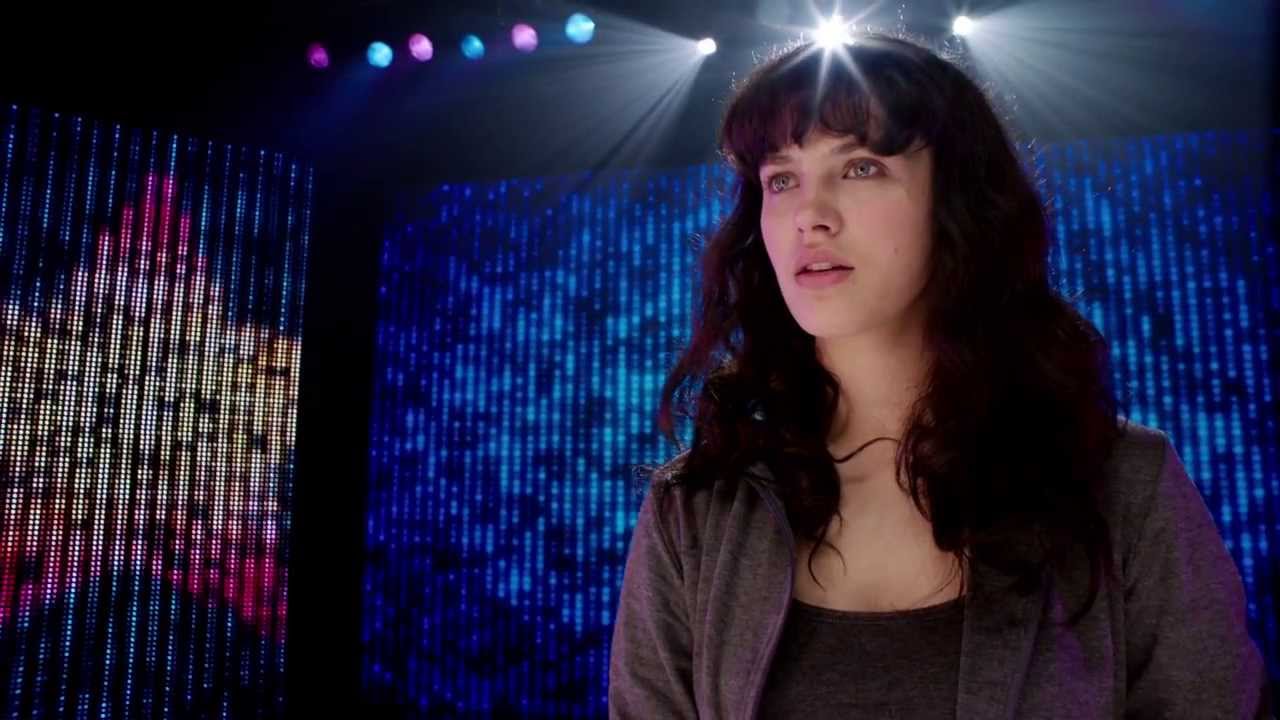
The first hint is in the second episode, “Fifteen Million Merits”, starring a de-Downton Abby’d Jessica Brown Findlay. The episode is about a future where people, possibly everyone, live in a confined building and must spend each day cycling on a stationary bike to earn merits which can be used to buy food, clothes, and of course, avatars for their online selves. The episode tries to say a lot, but its primary story comes from a woman who is gifted the requisite merits needed for the most expensive purchasable item – a chance to compete on a reality talent show and liberate yourself from this dreary life. Findlay’s character performs for a panel of judges who deem her not talented enough as a singer, but perfectly suited to, ahem, other services. This episode almost gets a pass from me given that it’s sort of blatantly underlining the use and abuse of women for others’ pleasure and if that were the end of it, the message would be received, albeit in a heavy handed way. 

"Being sold into pornography and dying giving birth. Note to self: Get new agent."

But let’s look at another example. The next episode, “The Entire History of You” is set in a future where the must-have technology device is actually an implant in your head that allows you to replay everything you see and do and even share those memories with people around you. A man, struggling at his job as a lawyer, comes to believe after a dinner party that his wife may have slept with another party attendee years ago. The jealousy leads to fights between the two as he comes to insist not only that she’s lying to him about having had an affair but also to demand that she show him her memories of the time in question to prove her fidelity to him. If this episode ended there, it would have simply left the main character as an insecure douchebag, but by forcing the issue we learn that his wife did actually have an affair and that, in fact, their young daughter was the product of that affair. In other words, the wife’s character, in the eyes of the show, was not entitled to the privacy of her own memories and the man’s frankly line-crossing behavior is utterly justified because of her lying ways, even after establishing that the man is borderline abusive, demeaning and jealous over perceived slights. While in the end his insistence on learning the truth leaves him hollow and without his family, that fate is cast as the result of her affair, not his inability to not be an ass to his family.

"Reviewing memories now...damn, turns out there was a 'it's all my fault' clause in the marriage vows..."

The trend continues in the episodes “Be Right Back” and “White Bear,” the third and fourth episodes. In the first, a woman (Hayley Atwell) becomes inconsolable after the death of her husband before learning that a company has perfected a way to create a sort of digital copy of his personality based on his online and social media activity, allowing her to get emails and phone calls from her “husband” before eventually even purchasing a life-sized artificial copy of him, a shell that can contain program files to recreate his personality. Throughout the episode, Atwell’s character moves through the stages of grief but becomes shrill and unreasonable. Again, handled differently this could be a powerful story about grief, or at least about how much of our personalities we leave in the world without thinking about it. In the end, what we get is a story about a woman who can’t handle not controlling her husband and so banishes the last remnants of him to an isolated existence.

Likewise, “White Bear” deals with a woman who awakes in a house she doesn’t recognize, unsure of who she is, and is quickly confronted with a kind of zombie-apocalypse style horror where the population has become mindless, focusing only on recording her every movement on their cell phones while she is chased by mysterious people in masks who want to kill her. In the end it’s revealed that she is actually in a kind of correctional facility for the crime of allegedly murdering a young child with her boyfriend and filming the murder and her punishment is to be tortured in front of a live audience every day with her mind wiped clean every night. Despite the presence of another woman (played by Tuppence Middleton) who actually has some agency of her own, the entire episode is one torturous sequence after another for a character who is hardly proven to have committed the crime she’s accused of.

An apt summation of the show in one image.


Part III: Conclusions (Come Back, Spoiler-phobes.)
So there’s my dilemma about Black Mirror: It’s an extremely well-produced and creative show about how humanity relates to technology and each other, but it’s got some major issues with the unstated politics of the show. Your mileage may vary as to how much this of value to you when watching. I’m not usually one to get caught up in a show’s political underpinnings. I can usually shut down that part of my brain and just enjoy the story. Something about Black Mirror made that hard for me, though. And once the switch was flipped in my brain, it made it really hard for me to go back.


I should also mention that I don’t think any of my issues with the themes in the show suggest that it isn’t well written, well-acted, and generally well done. It just makes for some sticky watching for me. Regardless, Netflix has already commissioned 12 episodes, almost doubling the existing seven that have already aired. Look for them on Netflix now with additional episodes due out in 2016. 

Tuesday, November 03, 2015

Latest TV News

We now interrupt your usual Fall TV blogging with some breaking news. I swear that Supergirl review is coming soon, but I've been seeing and reading so much good stuff on the internet lately (all hail the internet) that I just had to share.

First up! The return of one of television's most beloved franchises: Star Trek. CBS announced yesterday that it would create and air a new Star Trek series in 2017. The catch? While the pilot episode will premiere on CBS's television station, all other episodes will only air on the network's paid streaming service, CBS All Access.

I'm not sure I can adequately express how important this news is, not just for me, but for geeks everywhere. Star Trek: The Next Generation was one of my first fandoms and the first show I remember watching as a family. To this day, my brother and I have a tradition of seeing all the new Star Trek movies together (well at least at the same time since we live on different coasts).


As this most excellent article from The Verge points out, CBS is clearly using one of its most promising and popular established properties to send a clear signal that it is doubling down on its streaming service. Will it work? Only time will tell--but I'm not making any plans to subscribe just yet and I consider myself a big Star Trek fan. My current prediction is that CBS will only succeed in making it one of the most pirated shows on the internet (all hail the internet), but that's because the quality of Star Trek series since TNG has not been great. If CBS is really serious about making this work, they're going to need to get an amazing showrunner and fantastic writers to pull it off. If they try this shit with another Enterprise, well, it won't be pretty.

Speaking of networks upping their profile with new shows, Starz is really knocking it out of the park lately. They got on the map with Outlander, are developing American Gods (based on the Neil Gaiman novel) into a series, premiered Ash vs The Evil Dead on Halloween, and I am really excited about Flesh and Bone, an upcoming drama about ballet.


Center Stage fans, REJOICE!

Flesh and Bone is about a dancer getting her last shot! at living her dream! and dealing with mean dance company directors! But it also looks really beautiful, dark, and painful. So I'm on board. Flesh and Bone premieres on Starz on November 8. Break out your pointe shoes and set the DVR now.

Next in the "items I feel compelled to share" category, is this great bracket series over on Vulture dedicated to determining the Best High School Show in the Past 30 Years. If you're looking for something to distract you from the mind-numbing minutia of your everyday life, this series is it. The articles will fill your brain with happy memories of the shows that perfectly documented the angst and pain of teenage life. Early winners are Buffy and Daria (duh), but decisions are going to get really painful the more we need to cull the herd. I recommend reading this while at work, when you don't want to do work. Prefect time waster!

And finally...Jon Stewart is returning to television! Kinda. At some undetermined time. According to EW,"As part of a new four-year production agreement with the premium network, Stewart will create daily short-form content that will be showcased on the company’s streaming outlets HBO Go and HBO Now, as well as on other venues." It sounds kind of like Stewart has carte blanche to release short videos of himself talking about whatever strikes his fancy whenever the hell he wants. That's pretty sweet. But if it means more Jon Stewart in my life I am all for it.

That's all the news that's fit to print! See you soon with a Supergirl review and more fun from the internet (all hail the internet).

Wednesday, October 21, 2015

Crazy Ex-Girlfriend

I'm not sure I can express how much I love this show. Will you like it? I don't know. But it's basically Maggie catnip. A heroine who is funny, smart, likeable, and yet awkward and realistic? Check. Romantic comedy? Musical numbers? CHECK.

Yes, it has musical numbers. But don't freak out, it's only like two or three per episode. And they're witty and funny and catchy.

A lot of you will probably find the basic premise troubling. From wikipedia: "Rebecca Bunch is a single woman who still longs for her longtime soul mate Josh, who dumped her after their summer fling during summer camp in 2005. In 2015, she restarts her pursuit of Josh after she spots him in New York City. When he tells her that he is moving to West Covina, California ("Just two hours from the beach, four hours in traffic"), Rebecca decides to move there too, hoping that it will give her a fresh start and hopefully bring her closer to the still-elusive Josh."

So yes, she pulls a Felicity and moves somewhere in pursuit of a guy. And while this is where the crazy part of the title comes in (because why would a normal woman follow a man she hasn't seen for 10 years across the country?), Rebecca was deeply and completely unhappy with her life in New York. So Josh is more like...a metaphor if you will. For the last time in her life she was happy. She's chasing the dream of happiness.

Or maybe she's just kind of crazy. Either way, when I see her I see someone I would love to be friends with. She thinks things real women think and does things real women do. Rebecca, played by the wonderful Rachel Bloom, could be me. And I love it. She's even a lawyer!


Crazy Ex-Girlfriend airs on the CW Mondays at 8:00PM EST. You can catch up on the two aired episodes on the CW website, linked above.

Bonus video: my favorite song from the pilot, the "Sexy Getting Ready Song." Please note the Spanx.