It’s a familiar story.
Once upon a time, a young princess met a handsome price, got married,
and moved into a fantasy castle.
Life was wonderful for the princess, but the handsome prince wanted
more, so he arranged for his wife to be clandestinely raped by the devil in
order to produce the antichrist. I’ll grant you, this fairy tale may not have the same
familiarity of a Cinderella or a Snow White, but after watching NBC’s remake of
the 1968 horror movie Rosemary’s Baby,
you’d be forgiven for wondering exactly how many of the tropes are continued
from one story’s iteration to another, just like a fairy tale.
This time around, Rosemary’s
Baby is a miniseries starring Zoe Saldana in the title role made famous by
Mia Farrow. The miniseries expands
significantly on the original film and Ira Levin’s original novel in an attempt
to ratchet up the dread and paranoia that Rosemary feels over the course of her
pregnancy. Unfortunately, like an
expectant mother well into her third trimester, the end result is a kind of
bloating that makes the entire experience uncomfortable, rather than beautiful.

Demon baby. Svelte pregnancy figure sold separately.
The plot is familiar to anyone who remembers the movie or
the book: Saldana plays Rosemary, a young woman who moves with her struggling
creative husband from her familiar environment into a band new city. (Originally New York, in this version
Paris. More on that in second.) Elevated to living in a grand apartment
far outside their normal standard of living by an eerily kind and giving older
couple that establish themselves as mentors, confidantes, and sort of keepers
of the young couple, Rosemary soon finds herself pregnant with the child she’s
always wanted. As her pregnancy
progresses, Rosemary begins to sense that something is wrong and that her
neighbors are far too invested in her unborn child. Eventually coming to believe that the building’s residents
are actually cultists who are planning to use her child as a sacrifice to the
Devil, Rosemary falls into a web of paranoia and suspicion as everyone seems to
be against her. Or are they? (Spoiler alert: they are.)
This is all a fairly simple story, which makes the decision
to stretch that story into double its original length a confusing one. It’s
frankly the hallmark of this version of the story: it’s at turns bad and good,
boring and thrilling, atmospheric and dull. Several changes were made, some for better and others for
worse. Fair warning: from here on
out there may be spoilers. I
hesitate to say that, since I think the statute of limitations on a story that was filmed in the 1960s has passed, but just in case you’re not the classic horror
movie kind and want to keep yourself pure for your eventual Halloween movie
marathon, you’ve been warned.

Stop acting shocked, Mia. The movie is 46 years old. This isn't a Game of Thrones post.
Whereas the original film depicted Rosemary conceiving her
child fairly early on, that event doesn’t happen here until the end of the
first episode of the two-part series, effectively almost two hours into the
action. That split generates a bloated
first half that attempts to establish the creepiness and dread that the second
half will need to capitalize on, but more frequently feels boring and resorts
to mini storylines that are added and dropped in order to keep the viewers
waiting for the conception scene. Zoe
Saldana does an admirable job carrying the first boring half, but there’s only
so many times she can have a sickly sweet conversation with her new
benefactors, Margaux and Roman Castevet, as they pour her another special
herbal shake that they insist will help her get pregnant before the audience is
like, “they’re clearly evil – get a new apartment.” The conception scene comes as a relief, mostly because
so much has been built up about the Castavets that we no longer have any doubt
that they’re Satanists and just want to get to the demon lovemaking
already. Thankfully, the second
half proves to be a fairly tense and nerve-wracking 90 plus minutes, once
Rosemary is actually pregnant and we can return to the original plot.
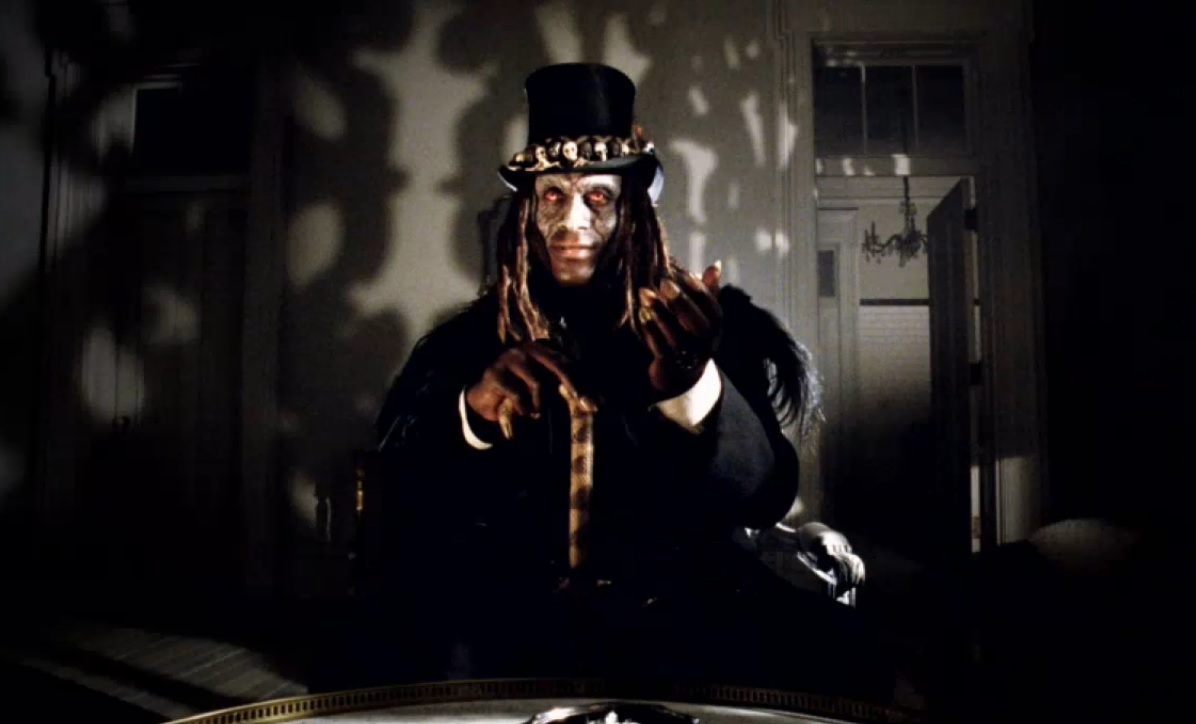
In that same vein, Roman Castevet’s characterization is given
far too much weight. Despite the
fact that he’s played by Jason Isaacs, a man who I will watch be a villain in
anything you care to put him in, the time and attention paid to his backstory
is needless. We certainly learn
more about him here than we did in the original story; In this version,
Rosemary discovers a series of murders of young women in the apartment, all of
whom shared a connection to wealthy resident of the apartment luxury apartment
building and whom the police pursued in connection to the murders before he
died 30 years ago. Surprising no
one, the original suspect and Roman Castavet are the same person. Because he’s the Devil. Like, literally the Devil. And he’s the one who had sex with
Rosemary, not to raise a child to sacrifice to himself, but to have a son here
on Earth. While this gives some
great opportunities for Isaacs be menacing, merging the character with the
demon, a change from the original, feels too small. One of the failings of modern suspense stories, likely the
result of an audience grown far savvier over time, is that no character can
just be himself – any villain must also really be someone else in
disguise. The irony is that
attempt to hide the villain’s true nature has the opposite effect here. Instead of wondering who’s behind it
all, we instantly suspect the worst of Roman.

Wealthy, powerful, and handsome? Yup, clearly evil.
There are welcome changes to this version as well. In the film, Rosemary and her husband
are a small town couple moving to New York City. The miniseries updates this, having the couple move from New
York City following a miscarriage to Paris. I could be cynical and say this change was made in an
attempt to appear new and fresh, New York having lost some of its shine as an
unconquerable city coupled with every young wannabe sophisticate in the United
States insisting upon proving their bone fides by having lived abroad, but to
be honest I liked the change. The
writers understood that viewers are no longer sympathetic to Mia Farrow’s
willow-y, weepy heroine, so the modern day Rosemary has to appear competent and
capable. She may not be like other
modern day heroines in a horror movie who will get into a fistfight with a
monster, but we need to at least believe that she has some of the vim and vigor
that she’ll need to have us on her side.
Putting Rosemary into a setting where she knows no one and
barely even knows the language is also a nice way of further isolating
her. The social constraints
against a wife in the 1960s go a long way to explaining why Mia Farrow’s
Rosemary doesn’t just leave the evil apartment building and go stay with her
mom for a few months or something.
Given that this modern Rosemary would almost certainly have a Facebook
page in addition to probably Twitter, Instagram and any other form social
networking, it would be a harder sell to put in her New York and ask us to
believe that she has no way of communicating with anyone. Putting her in a place where she
literally doesn’t speak the language and is separated by an ocean from her
family back home is an example of how to properly update a story.

"Voulez-vou coucher avec moi et mon démon bébé-papa?"
The change of venue has an aesthetic appeal as well. Paris is beautiful on film and has the
benefit of undercutting all that beauty with a slice of darkness. New York worked as a setting in the
film because of the city’s stained and gritty feel in the 1960s. It was all texture and shadow, like a
dirty Baroque painting. Watching
Rosemary navigate her way through Paris’s gothic streets while getting steadily
weaker as her pregnancy gets more and more frightening is a really fascinating
image. Likewise the final images of a suave and sophisticated looking Rosemary walking her infant demon baby in a pram down the banks of the Seine look utterly glamorous, even if Rosemary's sudden and uncharacteristic decision to go all evil at the last minute because WOMAN MUST DO EVERYTHING FOR THEIR BABIES is, at best, falsely nostalgic writing.
Rosemary’s Baby
works as a miniseries suitable for summer watching when there isn’t a lot of
new content on TV and you don’t have much else to get invested in. And while it is overstuffed, I’ll
credit the miniseries for at least attempting to bring something new to the
story rather than just release it in the theatres as a bankable property with
new faces but old ideas.