If you’re like me and 60 million other people, you spent
most of last fall listening and re-listing to Serial, the podcast from This
American Life that examined the 1999 murder of high schooler Hae Min Lee
and the subsequent trial and conviction of her ex-boyfriend, Adnan Syed. The
story was riveting, despite being unabashedly reflective of real life police
work (an entire episode was devoted to cell phone towers and how they work),
eschewing the fancy Hollywood noir for journalistic investigation. And while
we’re still waiting for Serial’s
second season to come out, apparently sometime this fall, HBO has created a
miniseries that may fill the Sarah Koenig-sized hole in your heart while
waiting for the next installment. The miniseries, The Jinx, was released this spring and, much in the same vein as Serial, re-examined a long cold murder
case with a fresh eye to the potential killer.
Just a guy sitting in a dark movie theatre alone. Nope, nothing creepy here.
The Jinx
focuses on Robert Durst, the son of an extremely successful and powerful
Manhattan real estate developer, Durst was in line to inherit the empire his
family built, but the head position ultimately went to his brother
instead. In 1982, Durst’s wife Kathie
vanished after a weekend at the couple’s home in Connecticut. She has not been
seen or heard from since and is still missing to this day. Durst was a suspect in her murder and The Jinx follows Durst through the
investigation into her death. But just when you assume this is a simple
cut-and-dried case of spousal murder, that’s when the other bodies start to
appear.
The Jinx
benefits from the cooperation of Durst himself. He speaks freely about his
past, the investigations he’s been at the core of, his thoughts and opinions of
his family and Kathie’s friends. Durst became interested in the project after
seeing the 2010 movie All Good Things,
a fictitious account of Kathie’s murder starring Ryan Gosling and Kirsten Dunst.
Impressed by the lack of sensationalism in the movie, Durst approached that
film’s director to see if he was interested in “finding the real story.” The
result is the six episode miniseries you see here.
Hollywood turned its unflinching eye on reality and bravely cast this Robert Durst lookalike as the lead.
So what is “the real story”? The facts, as they say, are
these: Sometime over the weekend of January 31, 1982, Kathie Durst went missing
around Newtown, Connecticut. Robert Durst
told police that they were in Connecticut at their weekend home and that he had
put Kathie on a train back to New York City the night of the 31st
because she had to be back to attend classes she was taking the next day. Robert said he called their Manhattan apartment
and talked to her that evening to verify she made it home before returning to
the city himself a few days later.
Kathie never showed up for her classes the next morning,
however staff at the Albert Einstein College of Medicine where she was a student
told police that she called them that morning to say that she was ill and
wouldn’t be in class today. And that’s
when Kathie disappears off the face of the earth. Robert reports her missing on
February 6, almost a full week after he says he saw her the last time. He
claims the delay is due to her busy schedule as a final year medical student,
saying that he would often go several days without seeing her.
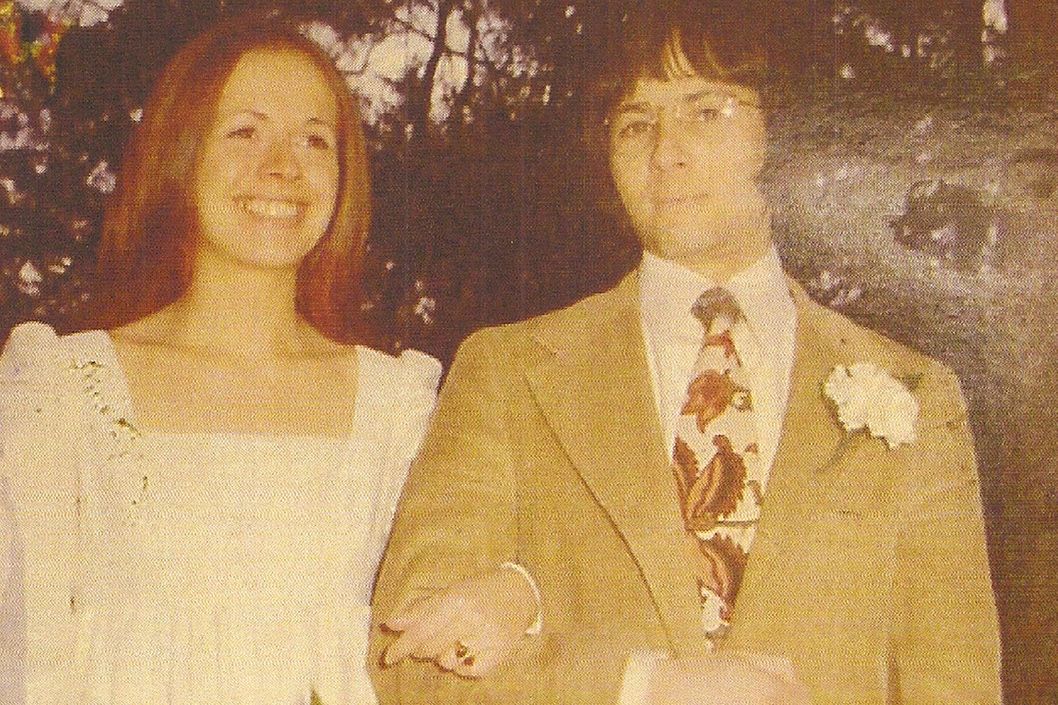
I'd say there's some eerie foreshadowing in their wedding picture, but to be honest that's pretty much how all the early 80s looked.
Worth noting that is that in the weeks prior to her
disappearance, Kathie told friends that Robert beat her and even sought medical
attention for wounds. She claims that he forced her to have an abortion and
that she considered divorce but felt hamstrung by a prenuptial agreement. The
night of January 31st, Kathie had been a friend’s party when she
left suddenly after receiving an angry phone call from Robert. Kathie
reportedly told her friend, “If something happens to me, check it out. I’m
afraid of what Bobby will do.”
Kathie’s case grows cold for lack of evidence. Robert’s
claims are dubious; he says he called Kathie from a payphone, but no payphone
was close to their home; A doorman at their Manhattan apartment recalled seeing
Kathie arrive home but admits that he only saw her from the back and it could
have been someone else. In the end, there is no body so Kathie is
officially a missing person. Durst recedes from attention, selling his home (and
many of Kathie’s possessions) and fading from view.
It’s not until a seemingly unrelated murder in Los
Angeles happens on Christmas Eve, 2000, a full 18 years later, that the case begins to find life again.
Susan Berman, daughter of a mobster and longtime friend of none other than
Robert Durst, is found murdered execution-style in her apartment. And it doesn’t end there. In September of
2001, a family fishing in Galveston, Texas, finds a grotesquely dismembered
torso floating off the beach surrounded by the severed body parts. Police
are able to identify the body as that of an elderly man named Morris Black. Take one guess as to who happens to be living in the apartment above him. Robert
Durst? Actually, a mute woman named Dorothy Ciner, someone Robert went to high school with. Confused? It only gets crazier.
The Jinx dives
deeply into this story, one that spans multiple decades and the length of the
United States. Durst himself comes off as unsettling at best. His voice is
odd, his facial tics like something that an actor would create in order to
appear mentally unbalanced. Durst has a way with words that is
unpolished and strangely refreshing, particularly for someone who has been through so
much media and legal questioning. When asked, for example, why he told police
that he had talked to Kathie when she arrived back in New York the night she
was last seen given that there was no other evidence of her ever even making it
on the train back to the city, he says, “I was hoping that would just make
everything go away.” An odd sentiment for a man whose wife has just gone
missing.
Definitely not a murderer. Can't even see how you could go there.
For all it traffics in the hugeness of the story, The Jinx strives to approach Durst with
objectivity as well. It explores his childhood, humanizing him without
apologizing for him. Durst tells a story about being woken in the middle of the
night when he was seven years old by his father and brought to a window in
their mansion. Durst's father told him to look to the roof where he saw his mother in her
nightgown standing by herself. Durst says his father made him watch as his
mother fell or was pushed to her death. The series establishes the myriad ways in which Robert was made to understand himself as not like his other brothers,
the ones who had earned their father’s favor. To say that the Durst family
dynamics were complicated is, obviously, an understatement.
In the end, The
Jinx makes its biggest splash when it uncovers evidence not previously
found in the original police investigations. The day before the final episode
aired in March on HBO, police made a high-profile arrest based largely on
evidence that the filmmakers uncovered. The filmmakers made clear after the
fact that they turned over all evidence to the police upon finding it. The
arrest was certainly well-timed from a ratings perspective, but unrelated to
the production schedule of the show.
In that sense, The
Jinx manages to do what Serial
did not – figure out what really happened. And while that’s no detriment to Serial’s production, it does give The Jinx the kind of closure that you
may find yourself craving after all this true crime hullabaloo. The Jinx manages to come off as a more
interesting 20/20. It doesn’t sex up the effects or take any
questionable licenses with the topic, but it is engaging, fascinating
storytelling. It’s the perfect thing to take up your time until the world’s
most favorite podcast comes back. Get on it, Koenig!